
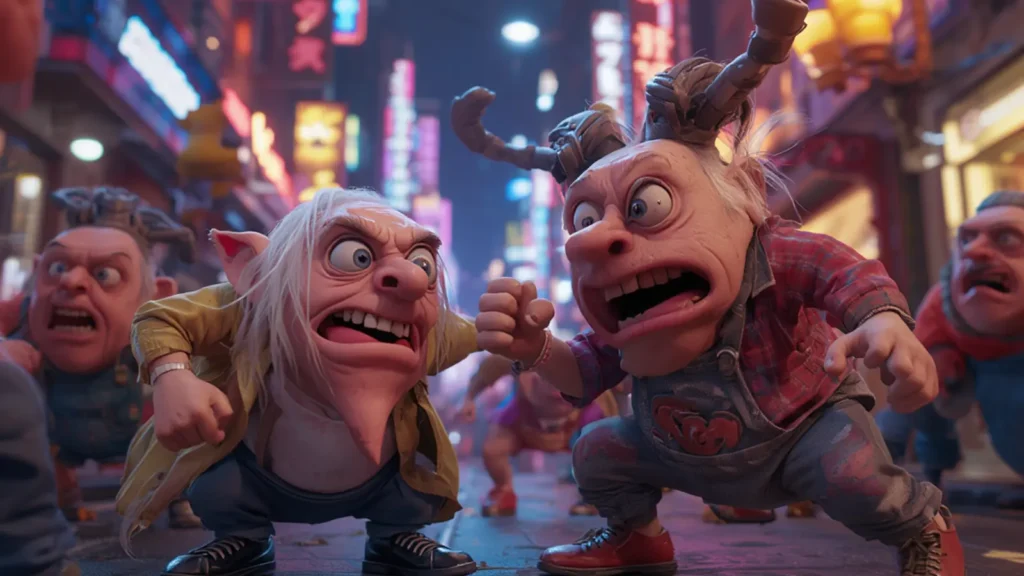
Ugly cartoon characters are some of the most memorable, culturally significant, and artistically intentional figures in the history of animation.
Far from being accidents or afterthoughts, these deliberately grotesque, exaggerated, and unconventionally designed characters represent some of the most sophisticated work animators have ever produced.
Whether you’re thinking about the warty chaos of Shrek’s swamp buddies, the bulging mismatched features of Quasimodo, or the blissfully hideous grin of characters like Earl from The PJs, animation has a long, rich tradition of using ugliness as a storytelling superpower.
This guide covers 100+ iconic ugly cartoon characters, organized by studio, era, and archetype — with deep dives into character design psychology, animation history, cultural impact, and the surprising truth about why audiences fall in love with faces they’d never want to see in real life.
Why Ugly Cartoon Characters Are Actually Animation’s Greatest Achievement
Before we dive into the characters themselves, it’s worth pausing on something most pop culture lists skip entirely: what makes a cartoon character “ugly,” and why does it work so well?
In realistic art, ugliness is a flaw. In animation, ugliness is a choice — and a sophisticated one at that. Animators and character designers use deliberate distortion, asymmetry, exaggerated proportions, unconventional color, and visual chaos to communicate personality, social status, emotional state, and narrative role. The field has a name for this: character design expressionism.
The Psychology Behind Ugly Character Design
Character designers at major studios routinely explain that audiences are hardwired to read faces. The human brain processes facial features at an extraordinary speed, making snap judgments about trustworthiness, friendliness, and intent. Animation exploits this by exaggerating features to make those readings instantaneous and emotionally potent.
- Wide-set, bulging eyes suggest naivety, innocence, or obsessive fixation
- Uneven or rotting teeth signal danger, comic incompetence, or social outsider status
- Mismatched proportions (huge head, tiny body) create instant comedy
- Warts, bumps, and asymmetrical features are shorthand for “monster,” “witch,” or “troll” — archetypes that go back thousands of years in human storytelling
- Dull, muted, or sickly color palettes applied to a character’s skin suggest illness, villainy, or otherness
What makes the best ugly cartoon characters so compelling is that this visual language is then complicated by personality. Audiences expect ugliness to mean evil or stupidity — and then the best character designers pull the rug out. Shrek is ugly and noble. Quasimodo is deformed and pure of heart. Gollum is grotesque and tragic. That subversion is where the emotional power lives.
Silhouette Design: The Animator’s Secret Weapon
One of the lesser-known principles taught in animation programs is the silhouette test: a well-designed character should be instantly recognizable in pure black silhouette with no color, texture, or detail. Ugly characters often have the most distinctive silhouettes of any character type — the hunchback, the giant nose, the enormous belly, the wiry limbs. Their visual distinctiveness is inseparable from their unconventional appearance.
Read Also This Blog : Click Now
Disney’s Iconic Ugly Characters: Villains, Monsters, and Misunderstood Outcasts
Disney has a complex relationship with ugliness. The studio’s house style — large eyes, soft features, idealized proportions for heroes — makes its ugly characters stand out all the more dramatically. Disney ugly characters tend to fall into two camps: theatrical villains whose appearance signals menace, and sympathetic outcasts whose appearance signals their rejection by a cruel society.
1. Quasimodo — The Hunchback of Notre Dame (1996)
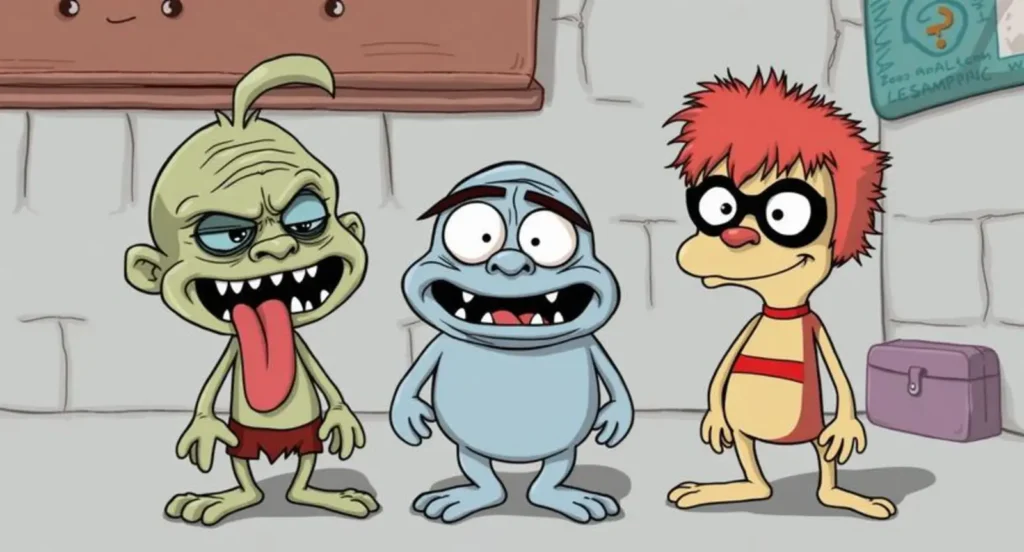
Studio: Disney | Role: Protagonist/Hero | Designer: James Baxter
Quasimodo is perhaps Disney’s most sophisticated exercise in ugly-hero design. He has a massively enlarged hunchback, a slightly misshapen face, deeply uneven features, and a dragging gait. Disney made a conscious choice not to sanitize Victor Hugo’s original description too heavily — Quasi is genuinely odd-looking by conventional standards, and the film doesn’t let him win by becoming conventionally beautiful.
What makes his design extraordinary is its warmth. His eyes are enormous and expressive (Disney’s go-to tool for empathy), and his face is capable of tremendous emotional range despite its asymmetry. Animators spent months studying how to make an audience root for someone who doesn’t look like a traditional hero.
Fun Fact: James Baxter, one of Disney’s legendary animators, spent so long perfecting Quasimodo’s physicality that he developed an entirely new technique for animating weight distribution in characters with non-standard skeletal structures.
Read Also This Blog : Click Now
2. Ursula — The Little Mermaid (1989)
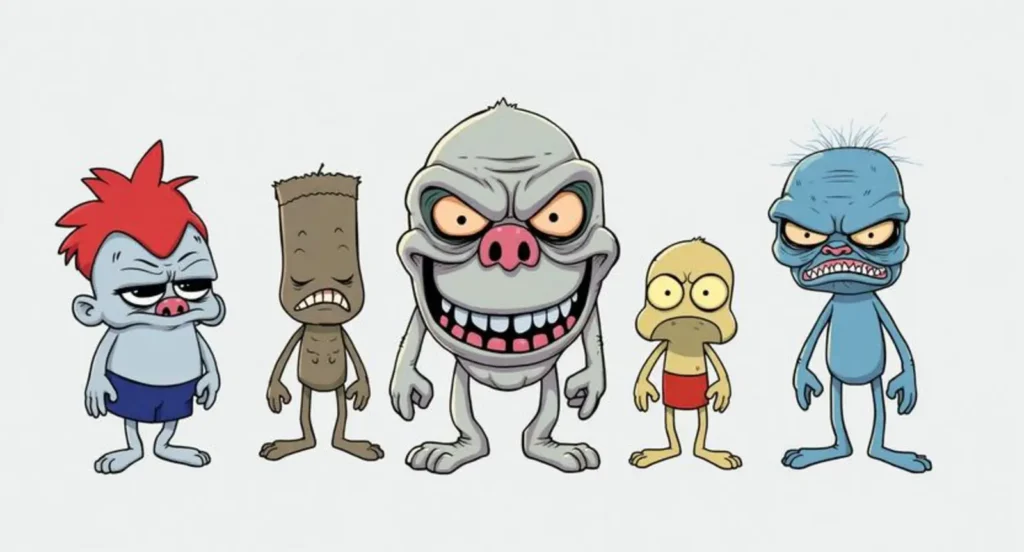
Studio: Disney | Role: Villain
Ursula is visually inspired by drag performer Divine and designed to be maximally theatrical in her ugliness. She’s enormous — her lower body is a mass of writhing purple tentacles — with chalk-white skin, heavily lined eyes, and an exaggerated operatic body language. She doesn’t just look menacing; she looks fabulous in her menace.
Her design uses contrast brilliantly: she’s paler than anyone else in the ocean kingdom, her colors (black, white, purple) are the opposite of the warm, coral-rich palette of Ariel’s world, and her physical mass dwarfs every other character. Every visual choice says “wrong” — wrong color, wrong size, wrong energy.
Fun Fact: Ursula was originally written as Triton’s sister, giving her story a family tragedy that was cut from the final film but explains the bitterness in her character.
Read Also This Blog : Click Now
3. The Evil Queen (Hag Form) — Snow White and the Seven Dwarfs (1937)
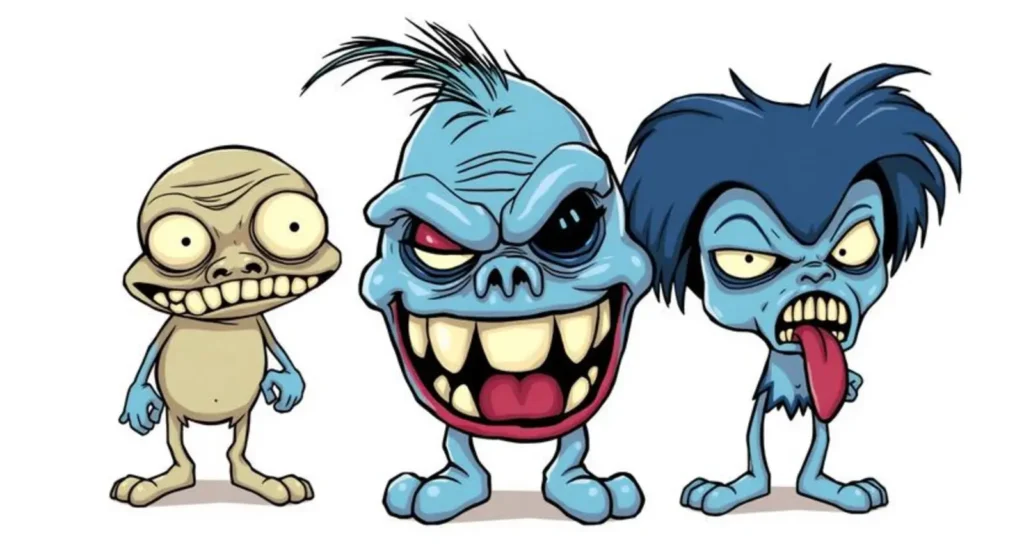
Studio: Disney | Role: Villain
The original Disney ugly character. When the Evil Queen transforms into the Hag to deliver the poisoned apple, she becomes animation history’s first great exercise in grotesque character design. Sunken cheeks, a bulbous nose with a wart, wild white hair, yellow eyes — the design draws directly from European folk tale traditions of the wicked witch and remains one of the most instantly recognizable character silhouettes in animation history.
Fun Fact: Animators studied footage of actors performing in heavy old-age makeup to capture the authentic physical hesitance and creaking quality of the Hag’s movement. The result was so disturbing that test audiences reported nightmares.
Read Also This Blog : Click Now
4. Madame Medusa — The Rescuers (1977)
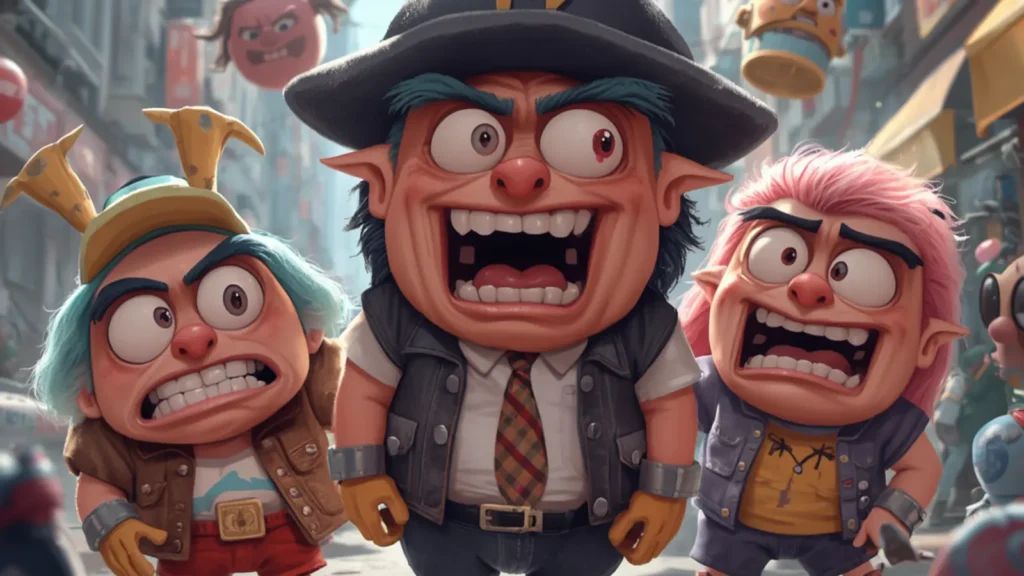
Studio: Disney | Role: Villain
Medusa is grotesque in a more human-scaled way than most Disney villains. She’s gangly, with stalk-like limbs, exaggerated red lipstick, and a face that collapses between glamour and horror depending on her emotional state. Designer Milt Kahl created her as a repudiation of the “beautiful villainess” archetype — she’s vain and ugly at once, which makes her more disturbing.
Fun Fact: Milt Kahl called Medusa his personal favorite character design of his entire career, largely because of the challenge of making ugliness and vanity coexist in the same face.
5. Yzma — The Emperor’s New Groove (2000)
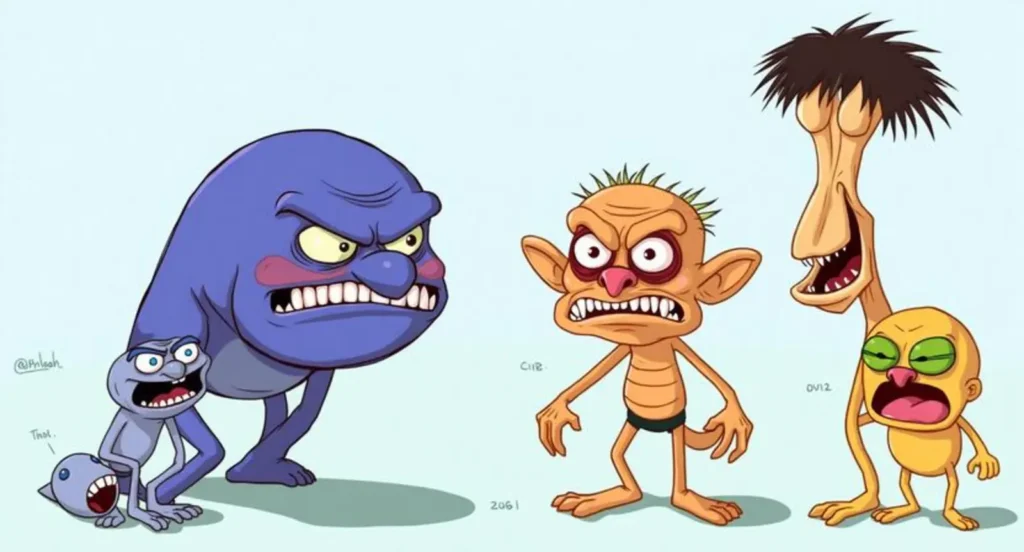
Studio: Disney | Role: Villain/Comic Character
Yzma is deliberately exaggerated into near-abstraction: a tiny, shriveled body, a head disproportionately large for her frame, enormous purple eye shadow, and a voice (Eartha Kitt) that suggests both power and ridiculousness. Her design was intentionally influenced by classic Warner Bros. cartoon logic — she’s a Looney Tunes character who wandered into a Disney film.
Fun Fact: Yzma’s original design in earlier production was a conventional scary villain. It was only when the film’s tone shifted toward comedy that designers pushed her look into full grotesque absurdism.
6. Frollo — The Hunchback of Notre Dame (1996)
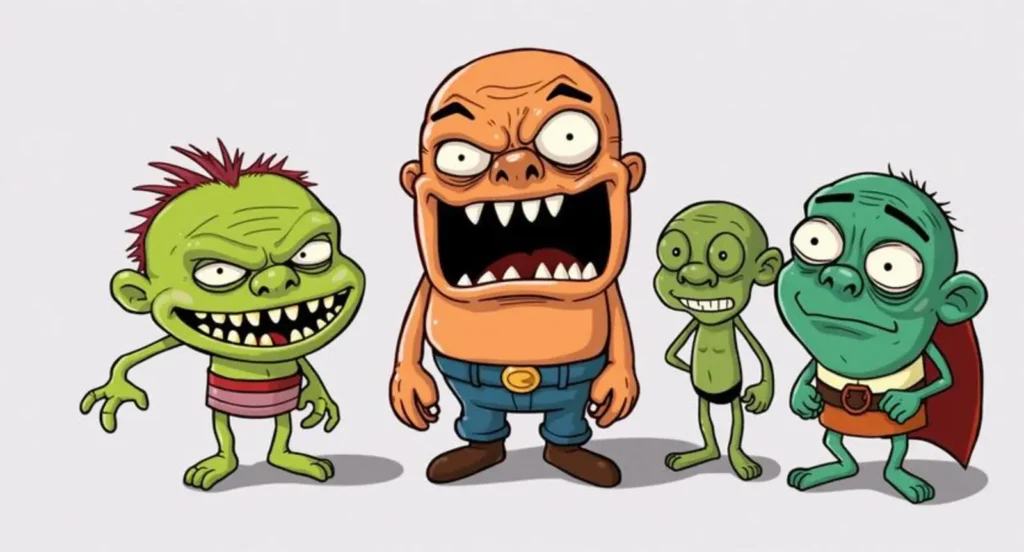
Studio: Disney | Role: Villain
While not conventionally “ugly” in a monstrous sense, Frollo’s design uses pinched, harsh geometry — sharp angles, deep shadows under his brow, thin lips, and cold coloring — to create a face that repels. He’s handsome in a severe, authoritarian way that signals danger. His “ugliness” is moral.
7. Stromboli — Pinocchio (1940)
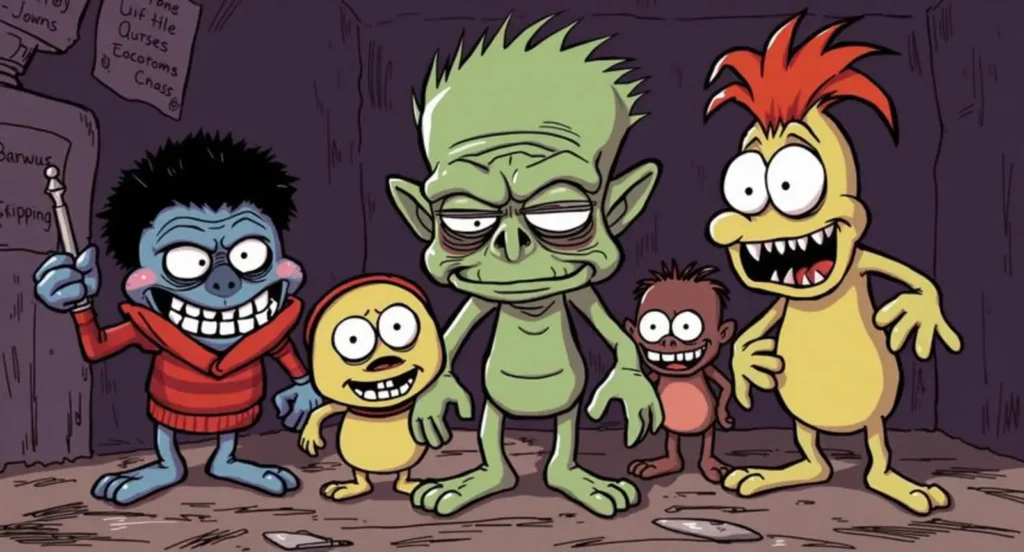
Studio: Disney | Role: Villain
Stromboli is vast, red-faced, black-bearded, and physically overwhelming. Every frame he’s in, his sheer mass becomes a visual representation of menace and greed. His design uses the classic “big man as threat” shorthand but executes it with extraordinary detail in fabric texture and facial expressiveness.
8. The Headless Horseman — The Adventures of Ichabod and Mr. Toad (1949)
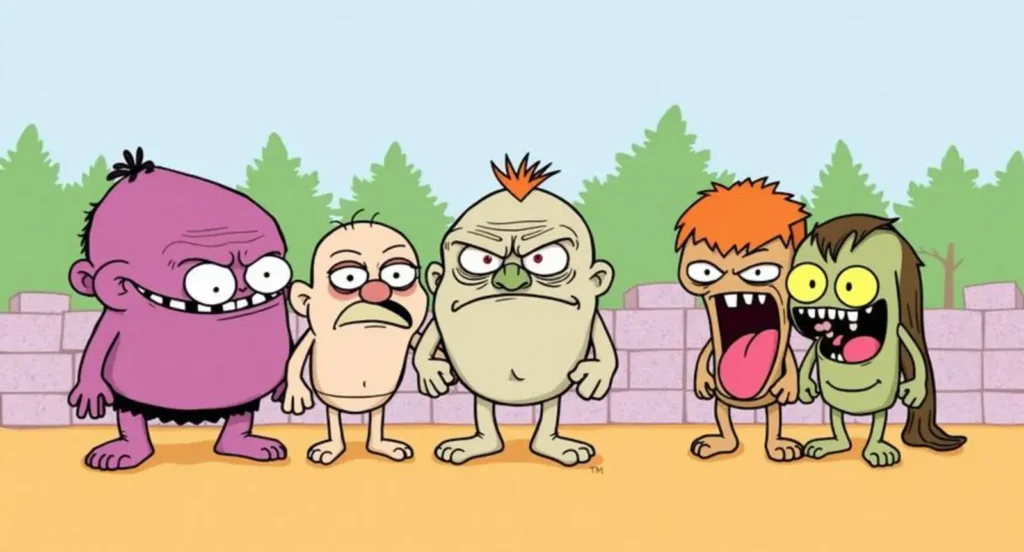
Studio: Disney | Role: Villain/Monster
Terrifying rather than comedically ugly, the Horseman’s design strips away the one feature audiences use to read emotion (the face) entirely. His silhouette — enormous black horse, enormous black figure, the gap where a head should be — is one of Disney’s greatest pieces of visual horror.
9. Jafar — Aladdin (1992)
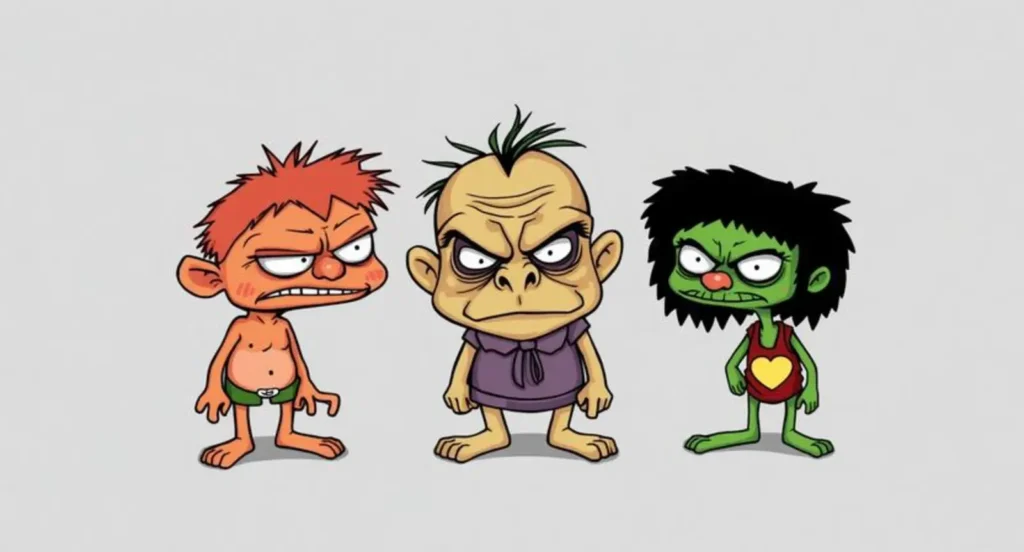
Studio: Disney | Role: Villain
Jafar’s angular, elongated design — impossibly thin and tall, with a face that seems to be mostly sharp edges — makes him visually alien and threatening. His second form, the giant cobra, amplifies the “wrong proportions” effect to its logical extreme.
10. Hades — Hercules (1997)
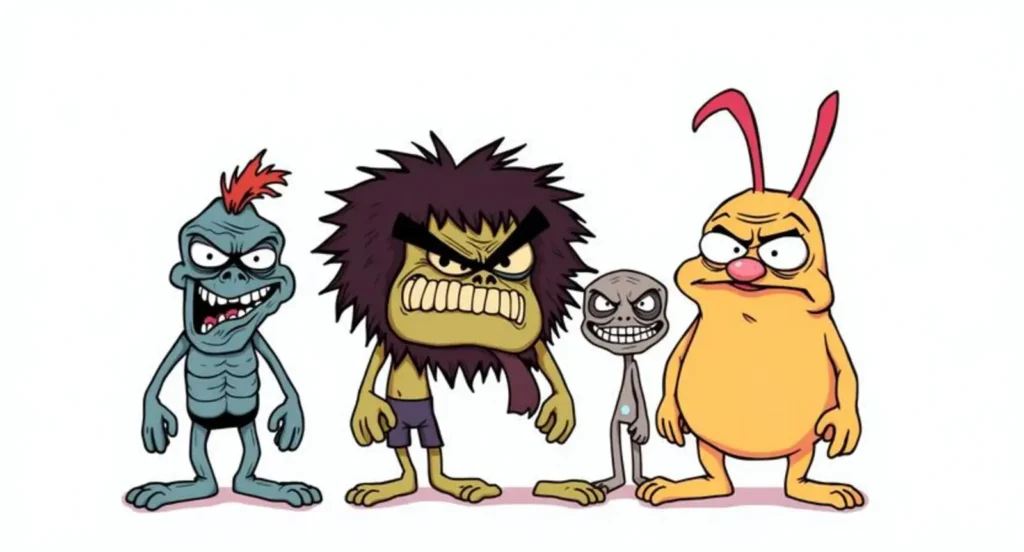
Studio: Disney | Role: Villain
Hades is visually revolutionary in Disney villainy: a gaunt, ashen face, flaming blue hair, and a rubber-hose limb energy that makes him feel like a Tex Avery character dropped into classical myth. He’s ugly in a kinetic, comedic way rather than a menacing one, and James Woods’s voice performance created a new archetype: the motor-mouth, deal-making cartoon devil.
DreamWorks’ Approach to Ugly: Comedy, Heart, and Subversion
DreamWorks Animation has built an entire franchise identity around reclaiming ugliness. The Shrek series is the most profitable and culturally significant exploration of “ugly as protagonist” in animated film history.
11. Shrek — Shrek franchise (2001–present)
Studio: DreamWorks | Role: Protagonist/Hero
Shrek is the defining ugly cartoon character of the 21st century. Enormous, green, lumpy, with ears like toilet plungers and a Scottish accent, he was designed as a deliberate anti-Disney-hero. His face has almost no sharp features — everything is rounded, bulbous, and soft, which paradoxically makes him easier to empathize with even as it marks him as “other.”
The cultural impact of Shrek cannot be overstated. He single-handedly established DreamWorks’ identity as the studio willing to celebrate antiheroes, and his franchise has become one of internet culture’s most beloved meme sources — perhaps the greatest proof that audiences don’t just tolerate ugly protagonists but actively embrace them.
Fun Fact: Shrek was originally voiced by Chris Farley, who recorded most of the film before his death in 1997. Mike Myers replaced him, and the decision to use a Scottish accent was Myers’ own suggestion.
12. Donkey — Shrek franchise (2001–present)
Studio: DreamWorks | Role: Sidekick/Comic Relief
Donkey isn’t conventionally ugly — he’s a normal donkey — but his design exaggerates the most chaotic, intrusive aspects of the animal (the braying grin, the enormous eyes, the restless energy) to create a character who feels ugly in a social sense. He takes up too much space in every scene.
13. Lord Farquaad — Shrek (2001)
Studio: DreamWorks | Role: Villain
Farquaad’s design is one of the most deliberately satirical in animation history. He’s extremely short, with the proportional body of a child and the authoritarian personality of a dictator. The visual joke — a tiny man in an enormous castle overcompensating for his size — never stops being funny because the design commits to it completely.
Fun Fact: John Lithgow’s voice performance was partly based on a friend of the filmmakers who had similar obsessive energy, but the character’s visual design was reportedly a parody of a real entertainment executive.
14. Fairy Godmother — Shrek 2 (2004)
Studio: DreamWorks | Role: Villain
The Fairy Godmother subverts the saccharine sweetness of the Disney archetype by making her enormous, garish, and ruthlessly transactional. Her design uses pastel sweetness as camouflage for ugliness of character.
15. Rumpelstiltskin — Shrek Forever After (2010)
Studio: DreamWorks | Role: Villain
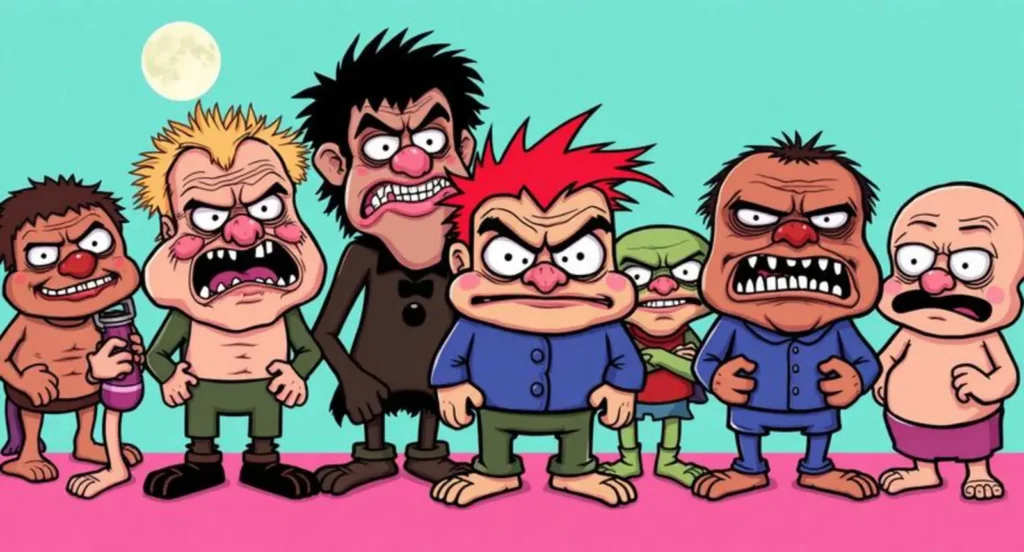
Rumpelstiltskin is the Shrek franchise’s most grotesque human villain — tiny, weasel-like, with a massive nose and disproportionate head. His wig collection becomes a comedic running gag that deepens his visual absurdity.
16. Gollum — The Lord of the Rings (1978, Ralph Bakshi)
Studio: Fantasy Films | Role: Antagonist/Tragic Figure
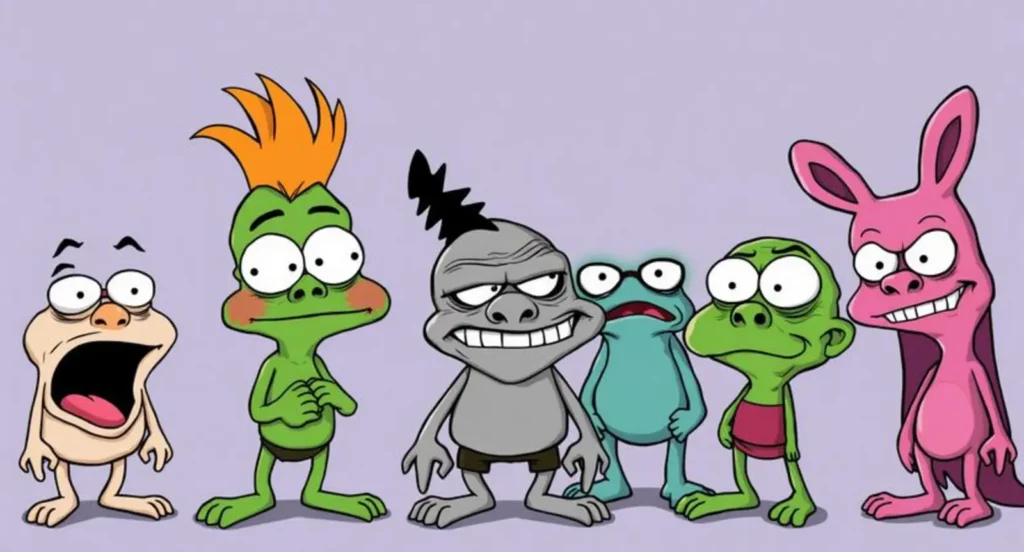
Before Peter Jackson’s photorealistic motion-capture Gollum, Ralph Bakshi’s rotoscoped version created one of animation’s most disturbing ugly characters: a translucent-skinned, hollow-eyed creature who moved with crawling wrongness. The design leans into the horror of degradation rather than the sadness.
Warner Bros. and Looney Tunes: Ugly as Pure Comedy
Warner Bros. Looney Tunes characters operate on a different principle than Disney or DreamWorks. Their ugliness is almost always comedic — exaggerated to the point of abstraction, driven by the needs of physical gag comedy, and drawing on the tradition of vaudeville and slapstick performance.
17. Yosemite Sam — Looney Tunes
Studio: Warner Bros. | Role: Villain/Antagonist
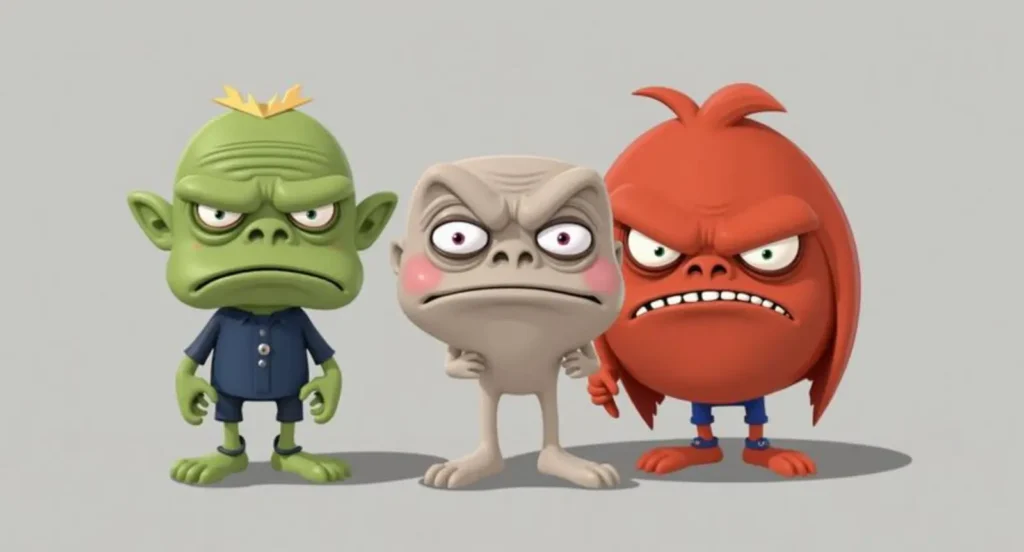
Sam’s design is based on the principle of maximum aggression packed into minimum space. He’s tiny, with enormous handlebar mustaches that dwarf his face, and his entire visual identity is built around explosive, uncontrollable fury. His face is almost hidden behind the mustache, which was a deliberate choice by designer Friz Freleng: Sam’s anger is his face.
18. Elmer Fudd — Looney Tunes
Studio: Warner Bros. | Role: Villain/Antagonist
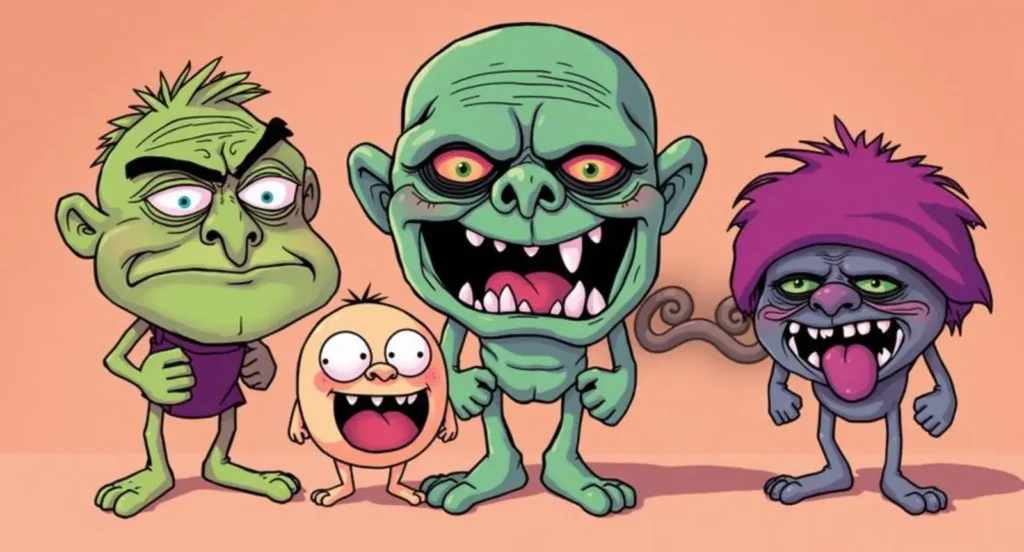
Fudd’s design uses soft, rounded ugliness — a bald, pudgy, slightly pear-shaped figure with a perpetual frown and beady eyes. He’s ugly in an unthreatening way that makes his persistent failure to catch Bugs Bunny funnier: nothing about him suggests competence.
19. Witch Hazel — Looney Tunes
Studio: Warner Bros. | Role: Villain/Comic Character
One of animation’s greatest witch designs: a scraggly-haired, warty-nosed figure who moves with chaotic energy and whose design is deliberately pushed into maximum grotesque expressiveness. Her hair drops pins with every frantic movement, which becomes both a character trait and a visual gag.
20. Gossamer — Looney Tunes
Studio: Warner Bros. | Role: Monster/Comic Character
Gossamer is a brilliant subversion: an enormous, shaggy red monster with tiny eyes and enormous hairy bulk who is consistently outmaneuvered by Bugs Bunny. His size and appearance signal threat; his behavior signals comedy. He’s also, notably, sometimes gentle and even sympathetic — one of the first examples of the “scary monster is actually sweet” subversion in American animation.
21. The Crusher — Looney Tunes
Studio: Warner Bros. | Role: Antagonist
A massive, flat-headed wrestler used for physical comedy contrast with Bugs Bunny. His design compresses the “brutish thug” archetype into its most essential visual elements.
Nickelodeon’s Ugly Character Legacy
Nickelodeon’s golden age (roughly 1991–2004) produced some of the most deliberately unconventional, art-forward ugly character designs in television animation history. Shows like Ren & Stimpy, Rocko’s Modern Life, and Invader Zim treated ugliness as an artistic statement.
22. Ren Höek — Ren & Stimpy (1991–1996)
Studio: Spümco/Games Animation/Nickelodeon | Role: Protagonist
Ren is animation’s great exercise in close-up grotesque. John Kricfalusi’s design philosophy required that characters be visually interesting and disturbing at maximum zoom — and Ren delivers. In close-up, his face contorts into extraordinary detail: visible muscle, veins, uneven teeth, quivering gums. The show pioneered the “gross-up close-up” as a comedic technique, deliberately disgusting viewers at the moment of maximum emotional intensity.
Fun Fact: Kricfalusi was heavily influenced by 1930s and 1940s animation, particularly the work of Bob Clampett, which embraced physical distortion in a way that mainstream TV animation had largely abandoned.
23. Stimpy — Ren & Stimpy (1991–1996)
Studio: Spümco | Role: Protagonist
Stimpy is ugly in the opposite direction from Ren — he’s enormous, soft, and almost featureless in his stupidity, with a giant red nose, tiny eyes, and an underbite. His cheerful, oblivious grotesqueness is the perfect counterpoint to Ren’s neurotic ugliness.
24. Rocko — Rocko’s Modern Life (1993–1996)
Studio: Nickelodeon Animation | Role: Protagonist
Rocko himself isn’t conventionally ugly, but the show’s entire visual aesthetic is built around grotesque character design. Heffer Wolfe, his enormous steer friend, and Filburt, his neurotic turtle companion, represent two classic ugly archetypes: the blobby and the pinched.
25. Heffer Wolfe — Rocko’s Modern Life
Studio: Nickelodeon Animation | Role: Supporting Character
A massively overweight steer with a perpetual grin and tiny hooves, Heffer is designed around physical excess — too much of everything, poorly organized. He’s lovable precisely because his design suggests a total absence of self-consciousness about his own appearance.
26. Invader Zim — Invader Zim (2001–2002, revived 2019)
Studio: Nickelodeon Animation | Role: Protagonist/Villain
Zim is a fascinating ugly character because his design is clean and simple by Invader Zim standards, but alien in ways that accumulate. No visible ears or nose, entirely green, enormous pink eyes that occasionally reveal his fundamental wrongness. The show’s real ugly characters are the humans around him, designed to look lumpy and misshapen compared to Zim’s rigid alienness.
27. GIR — Invader Zim
Studio: Nickelodeon Animation | Role: Sidekick
GIR in his dog disguise is one of animation’s great “wrong” designs — a malfunctioning robot in a lumpy green dog suit with enormous dead eyes and a zipper up the front. The design works because it’s exactly wrong enough to be disturbing but exactly cute enough to be beloved.
28. Oblina — Aaahh!!! Real Monsters (1994–1997)
Studio: Klasky Csupo/Nickelodeon | Role: Protagonist
Oblina is designed like a candy cane with a mouth — literally a black-and-white striped curved tube with lips and eyes. Her ability to reach inside herself and pull out her organs for scare tactics made her one of the show’s most grotesquely inventive characters.
29. Ickis — Aaahh!!! Real Monsters
Studio: Klasky Csupo | Role: Protagonist
Ickis looks like a rabbit dipped in acid and stretched slightly — enormous ears, tiny body, wide red eyes. His design plays on the “almost cute, actually disturbing” principle that the best Nickelodeon ugly characters mastered.
30. Krumm — Aaahh!!! Real Monsters
Studio: Klasky Csupo | Role: Protagonist
Krumm may be the most physically inventive design in ’90s Nickelodeon: he has no eyes in his head — he carries them in his hands. He’s also covered in body odor that functions as his primary power. His design is pure grotesque imagination.
31. CatDog — CatDog (1998–2005)
Studio: Nickelodeon Animation | Role: Protagonist
The concept is the design: a cat fused to a dog with no tail, no back legs (for the dog) or front legs (for the cat), and no clear anatomy between the two ends. The fundamental wrongness of their form generates every joke and conflict the show ever produced.
32. Sanjay — Sanjay and Craig (2013–2016)
Studio: Nickelodeon Animation | Role: Protagonist
Craig the snake’s design is deliberately unpleasant — a long, realistic-ish snake who serves as a best friend. The show continued Nickelodeon’s tradition of pairing a human protagonist with a visually unconventional companion.
Cartoon Network’s Gallery of Grotesque
Cartoon Network’s in-house productions, particularly from its Cartoon Cartoons era and later Adult Swim block, produced some of animation’s most deliberately strange and ugly character designs.
33. The Grim Reaper — The Grim Adventures of Billy & Mandy (2003–2007)
Studio: Cartoon Network Studios | Role: Protagonist/Antagonist
Grim is a skeleton in a hood who’s been domesticated into suburban life. His design contrast — ancient symbol of death in mundane settings — generates the show’s entire comic premise. He’s ugly in an existential way.
34. Billy — The Grim Adventures of Billy & Mandy
Studio: Cartoon Network Studios | Role: Protagonist
Billy’s enormous pink nose — so large it seems like a separate character attached to his face — is one of the most memorable ugly design choices in Cartoon Network history. His low intelligence is physically encoded in his slack jaw and vacant eyes.
35. Mandy — The Grim Adventures of Billy & Mandy
Studio: Cartoon Network Studios | Role: Protagonist
Mandy is interesting because she’s designed to be perfectly symmetrical and controlled — almost a non-face — which makes her more disturbing than the grotesque characters around her. Her design is ugly in a void-like way: no visible nose, an economy of features that suggests the absence of human warmth.
36. Ed — Ed, Edd n Eddy (1999–2009)
Studio: a.k.a. Cartoon | Role: Protagonist
Ed is a masterclass in lovable ugliness: huge, loose, poorly coordinated, with a monobrow and a face that seems slightly too flat. His design suggests a creature assembled from different bodies by someone working from a description.
37. Eddy — Ed, Edd n Eddy
Studio: a.k.a. Cartoon | Role: Protagonist
Eddy’s enormous head compared to his tiny body, combined with his absolute certainty in his own worth, creates a design whose ugliness is intrinsically comic. Creator Danny Antonucci drew everyone in the show without pupils, giving all characters an uncanny baseline strangeness.
38. Rolf — Ed, Edd n Eddy
Studio: a.k.a. Cartoon | Role: Supporting Character
Rolf’s design gives him an Eastern European peasant quality — large, rough-featured, out of place in the cul-de-sac setting. His visual foreignness mirrors his cultural foreignness in the narrative.
39. Kevin — Ed, Edd n Eddy
Studio: a.k.a. Cartoon | Role: Antagonist
Kevin’s face is dominated by freckles and a permanent sneer. He’s ugly in a mean-kid way — the design tells you his personality before he opens his mouth.
40. Flapjack — The Marvelous Misadventures of Flapjack (2008–2010)
Studio: Cartoon Network Studios | Role: Protagonist
Flapjack is designed with an extreme close-up intensity that makes him disturbing in still frames: enormous round eyes, a tiny puckered mouth, a rosy complexion that suggests a Victorian doll somehow given life. The show famously used live-action inserts and extreme stylization to push its characters into the uncanny valley.
41. Captain K’nuckles — The Marvelous Misadventures of Flapjack
Studio: Cartoon Network Studios | Role: Protagonist/Mentor
K’nuckles is an old sailor made of prosthetics — his legs, hands, and nose are all replacements — designed with a worn, battered quality that makes him look assembled rather than born. His design is among the most original ugly-character concepts of the 2000s.
42. Aku — Samurai Jack (2001–2004, 2017)
Studio: Cartoon Network Studios | Role: Villain
Aku is an unusual kind of ugly: he’s made of abstract, angular evil — a shape-shifting demon of black fire with green flame eyebrows and red eyes. His design is flat and graphic in a way that makes him feel like a living symbol rather than a creature.
43. Him — The Powerpuff Girls (1998–2005)
Studio: Cartoon Network Studios | Role: Villain
Him is perhaps the most unsettling villain in children’s television: a lobster-clawed, tutu-wearing figure with an androgynous appearance and a voice that slides between sweet and horrifying. His design is ugly in a transgressive way that deliberately unsettles audience expectations.
44. Mojo Jojo — The Powerpuff Girls
Studio: Cartoon Network Studios | Role: Villain
Mojo Jojo’s enlarged, exposed brain — held in place by a helmet that has to keep expanding — is both his defining visual and the visual joke that encodes his tragic delusion. He’s a genius who looks ridiculous.
45. Fuzzy Lumpkins — The Powerpuff Girls
Studio: Cartoon Network Studios | Role: Villain
Fuzzy is a big pink hillbilly monster — enormous, soft, violent, and deeply territorial. His design uses “wrong scale” (he’s far too big for the world he lives in) and “wrong color” (pink monsters read as wrong) to maximum effect.
Fox, Adult Swim, and Prime Time Ugly: A New Kind of Grotesque
46. Peter Griffin — Family Guy (1999–present)
Studio: Fox/Seth MacFarlane Productions | Role: Protagonist
Peter Griffin’s design — a spherical torso, tiny limbs, huge chin, and thick-framed glasses — is designed to be maximally wrong in a rubbery, animated-sitcom way. His physical stupidity (he frequently injures himself in ways that suggest no understanding of his own body) is baked into the design.
47. Quagmire — Family Guy
Studio: Fox | Role: Supporting Character
Quagmire’s enormous chin is his defining ugly feature — it’s disproportionate in a way that becomes a physical punchline. The chin has been the subject of its own meta-commentary within the show.
48. Cleveland Brown — Family Guy / The Cleveland Show
Studio: Fox | Role: Supporting Character/Protagonist
Cleveland’s design is rounder, softer, and less dynamic than Peter’s, which makes him visually the “calm one” — his design is ugly in an inoffensive, forgettable way that supports his characterization.
49. Homer Simpson — The Simpsons (1989–present)
Studio: Fox/Gracie Films | Role: Protagonist
Homer is the most important ugly cartoon protagonist in television history. Matt Groening’s design — a nearly circular head, five o’clock shadow represented as stubble marks, tiny eyes, an overbite — is so iconic that it’s ceased to read as ugly to most people. But the original design was a deliberate rejection of the clean-featured sitcom father archetype.
Fun Fact: Groening designed the Simpsons in a waiting room while about to pitch a different show to Fox, reportedly in less than fifteen minutes.
50. Bart Simpson — The Simpsons
Studio: Fox/Gracie Films | Role: Protagonist
Bart’s spiky hair, large head relative to body, and generally chaotic energy make him ugly in an endearing, anarchic way. His design was revolutionary in 1989 because it depicted a child without the idealized sweetness that characterized most animated children.
51. Mr. Burns — The Simpsons
Studio: Fox/Gracie Films | Role: Villain
Burns is ugly in a specifically ancient, withered way: impossibly thin and stooped, with a pinched face and claw-like hands. He’s designed to look like he’s been preserved past his natural expiration date by money and spite. His design is one of television animation’s finest villain silhouettes.
52. Sideshow Bob — The Simpsons
Studio: Fox/Gracie Films | Role: Villain
Bob’s defining ugly feature is his hair — an enormous palm tree of reddish-brown that sits on top of a face too refined and intelligent to belong to the world of Springfield. The contrast between his aristocratic features and his absurd hair makes him visually hilarious before he says a word.
53. Hans Moleman — The Simpsons
Studio: Fox/Gracie Films | Role: Supporting Character
Moleman is ugly in a purely pathetic way — a tiny, ancient figure with enormous glasses and a voice like a dying engine who exists primarily to suffer. His design is a visual shorthand for “the universe’s most put-upon person.”
54. Professor Farnsworth — Futurama (1999–2013, revived 2023)
Studio: Fox/20th Television Animation | Role: Protagonist
Farnsworth is the Simpsons design logic applied to even older age: he’s stooped, tiny, barely held together, with enormous glasses and a permanent expression of vague alarm. His design suggests a man whose body has been arguing with him for decades.
55. Zoidberg — Futurama
Studio: Fox | Role: Supporting Character
Dr. Zoidberg is a walking lobster-alien hybrid in a doctor’s coat — a creature of the deep ocean attempting to navigate human social norms without the tools or appearance to succeed. His design is one of the most inventive in television animation: his face opens into tentacled mandibles rather than a conventional mouth.
Fun Fact: Zoidberg’s character arc from unloved outcast to fan favorite mirrors the real-world audience response to his design — initially alarming, eventually beloved.
56. Bender — Futurama
Studio: Fox | Role: Protagonist
Bender is ugly in a robotic way — his face is a simple cylindrical head with a grill mouth and a permanent smug expression. The simplicity of his design, combined with John DiMaggio’s voice performance, creates a character whose visual bluntness is itself the joke.
Classic Cartoon Ugliness: The Historical Foundations
57. Popeye — Popeye the Sailor (1929–present)
Studio: Fleischer Studios / King Features | Role: Protagonist
Popeye is one of animation’s most iconic ugly heroes: a squinting, cross-eyed sailor with an enormous chin, a corncob pipe permanently planted in his cheek, and arms that swell to impossible size. His design comes from E.C. Segar’s original comic strip and was deliberately sailor-rough — a hero who looked like he’d been through something.
58. Bluto/Brutus — Popeye
Studio: Fleischer Studios | Role: Villain
Bluto is massive, bearded, and physically overwhelming — designed to make Popeye’s victories feel genuinely improbable. His ugliness is the brute kind: too much face hair, too much body, too much aggression packed into one frame.
59. Swee’Pea — Popeye
Studio: Fleischer Studios | Role: Supporting Character
A baby so formless and boneless-looking that he became iconic — Swee’Pea is ugly in the way very young infants sometimes are, but pushed slightly further into abstraction.
60. Wimpy — Popeye
Studio: Fleischer Studios | Role: Supporting Character
Wimpy is ugly in a self-satisfied, rotund way — a doughy, mustachioed man who exists in a permanent state of hunger-related scheming. His design says everything about his character before he opens his enormous mouth.
61. Betty Boop — Betty Boop (1930–1939)
Studio: Fleischer Studios | Role: Protagonist
Betty Boop is interesting because she’s intended to be attractive but was designed in an era before animation settled on what “attractive” meant — her enormous head, tiny body, and enormous eyes push her into uncanny territory by modern standards.
62. Koko the Clown — Out of the Inkwell (1918–1929)
Studio: Fleischer Studios | Role: Protagonist
Koko predates the concept of “character design” as a discipline and looks it — a roughly sketched clown whose features shift slightly between frames. His ugliness is archaeological: a glimpse of animation before conventions existed.
63. Felix the Cat — Felix the Cat (1919–present)
Studio: Pat Sullivan / Otto Messmer | Role: Protagonist
Felix’s design is so stylized it precedes the idea of “cat” by some margin — two circles, two triangles, a tail. His eyes, in early shorts, are genuinely wrong-looking: white spheres on a black face that float independently. He’s the ancestor of every simple-but-strange character design since.
Ugly Villain Showdown: A Comparison Table
| Character | Series | Studio | Ugly Type | Memorable Feature | Villain Style |
|---|---|---|---|---|---|
| Ursula | The Little Mermaid | Disney | Theatrical excess | Tentacle body | Operatic menace |
| Yzma | Emperor’s New Groove | Disney | Withered grotesque | Oversized head | Comic buffoonery |
| Him | Powerpuff Girls | Cartoon Network | Transgressive | Lobster claws + tutu | Psychic horror |
| Jafar | Aladdin | Disney | Angular menace | Razor-sharp features | Cold authority |
| Hades | Hercules | Disney | Kinetic grotesque | Flaming blue hair | Motor-mouth devil |
| Lord Farquaad | Shrek | DreamWorks | Satirical diminutiveness | Extreme shortness | Power-obsessed manchild |
| Gargamel | The Smurfs | Hanna-Barbera | Skeletal obsession | Enormous nose | Futile persecution |
| Skeletor | He-Man | Filmation | Pure skull | Exposed skull face | Theatrical megalomania |
| Maleficent | Sleeping Beauty | Disney | Horned elegance | Sharp horns, pale skin | Aristocratic evil |
| Team Rocket | Pokémon | OLM/4Kids | Human normality as villains | Matching uniforms | Bumbling menace |
Ugly Sidekicks, Comic Relief, and Supporting Characters
Some of animation’s ugliest and most memorable characters occupy the supporting role — the comic relief, the loyal companion, the scene-stealing weirdo who threatens to take over the show.
64. Gargamel — The Smurfs (1981–1989)
Studio: Hanna-Barbera | Role: Villain
Gargamel is the great futile-villain archetype: a tall, thin, hunched wizard with an enormous nose, wild eyes, and a cat companion (Azrael) who shares his ugliness. His design encodes his obsession — the sharp features of someone who spends all their time in concentrated hatred.
65. Skeletor — He-Man and the Masters of the Universe (1983–1985)
Studio: Filmation | Role: Villain
Skeletor has no face — just a skull. His design is the extreme end of villain ugliness: no skin, no features, just bone. His blue skin beneath the skull head makes him stranger, not less disturbing. He’s the platonic archetype of “cartoon villain design.”
66. Mumm-Ra — ThunderCats (1985–1988)
Studio: Rankin/Bass | Role: Villain
Mumm-Ra exists in two forms: bandaged and withered (an ugly mummy) and transformed into an enormous blue demon. Both forms are deliberately designed to maximize visual threat through ugliness.
67. Gollum — Rankin/Bass The Return of the King (1980)
Studio: Rankin/Bass | Role: Antagonist
The Rankin/Bass Gollum predates Peter Jackson and presents a more overtly reptilian version — green-tinged, amphibian, with enormous eyes. It’s arguably the ugliest mainstream animated interpretation of the character.
68. Brainy Smurf — The Smurfs
Studio: Hanna-Barbera | Role: Supporting Character
Brainy’s glasses and perpetual sneer make him ugly in a social sense — he’s the character everyone around him finds intolerable, and his design encodes that rejection in his permanent self-satisfied expression.
69. Azrael — The Smurfs
Studio: Hanna-Barbera | Role: Villain’s Pet
A mangy, perpetually annoyed cat who shares his owner’s unsuccessful energy. His design gives him the permanently disappointed expression of an animal who knows it’s attached to a loser.
70. Meowth — Pokémon (1997–present)
Studio: OLM | Role: Villain/Comic Relief
Meowth walks upright, speaks human language, and has a gold coin on his forehead — a design that’s slightly wrong in every way. His face is capable of extraordinary expressiveness, particularly when schemes are failing, which is always.
71. Jessie and James — Pokémon
Studio: OLM | Role: Villain
Team Rocket’s human members aren’t conventionally ugly, but the show’s design style makes their exaggerated expressions — particularly James’s rubber-limbed meltdowns — push into Looney Tunes grotesque territory.
72. Dr. Robotnik/Eggman — Sonic the Hedgehog
Studio: DiC/Sega | Role: Villain
Robotnik’s classic design — enormous red mustache, round body, pinpoint eyes behind tinted goggles — is one of game-to-animation character design’s great translations. He’s physically the opposite of Sonic in every way, which is the entire visual argument of the franchise.
73. Squidward Tentacles — SpongeBob SquarePants (1999–present)
Studio: Nickelodeon Animation | Role: Supporting Character
Squidward is ugly in the most precise way possible: he’s a caricature of midlife disappointment. An enormous cylindrical nose, drooping eyes, a permanent expression of contempt and resignation — he’s the physical incarnation of a man who peaked emotionally at seventeen and has been declining ever since.
Fun Fact: Squidward is technically an octopus, not a squid — he has six limbs, not eight or ten. Creator Stephen Hillenburg admitted the name “Squidward” just sounded better.
74. Patrick Star — SpongeBob SquarePants
Studio: Nickelodeon Animation | Role: Supporting Character/Protagonist
Patrick is ugly in the most generous possible way — a large pink starfish whose face registers thought only intermittently, like a power going in and out. His design is essentially an oval with a small face at the bottom, which makes his moments of accidental wisdom funnier for the contrast.
75. Mr. Krabs — SpongeBob SquarePants
Studio: Nickelodeon Animation | Role: Supporting Character
A crab whose design reduces him to a pair of claws, eyes on stalks, and a permanent expression of mercenary calculation. His body is clearly held together by greed — remove the money and there’d be nothing left.
76. Plankton — SpongeBob SquarePants
Studio: Nickelodeon Animation | Role: Villain
Plankton is microscopic but designed to be clearly visible, which means his scale is perpetually wrong. One enormous eye in a tiny green body, spending all his time on schemes far too large for his frame. He’s ugly in the way ambition without proportion creates ugliness.
Animation’s Most Wonderfully Ugly Human Characters
77. Daria Morgendorffer — Daria (1997–2002)
Studio: MTV Animation | Role: Protagonist
Daria isn’t conventionally ugly, but she’s designed to be visually opposed to the shallow beauty culture her show critiques. Round glasses, a flat expression, practical clothes — her refusal to perform attractiveness is itself a visual argument.
78. Beavis — Beavis and Butt-Head (1993–2011, 2022)
Studio: MTV Animation | Role: Protagonist
Beavis’s design is an anatomically wrong teenager: too much forehead, too many teeth visible at once, an expression of permanent dopey anticipation. His design encodes exactly one thought process: something is either “cool” or it isn’t.
79. Butt-Head — Beavis and Butt-Head
Studio: MTV Animation | Role: Protagonist
Butt-Head’s braces and enormous square head make him ugly in a slightly more authoritarian way than Beavis — he’s the dominant ugly, which means he gets to decide what’s cool.
80. Stuart — The Ren & Stimpy Show Adult Party Cartoon
Studio: Spümco | Role: Supporting Character
Stuart represents the later, extreme end of Kricfalusi’s design aesthetic — pushed into territory that became genuinely disturbing rather than comedically gross.
81. Earl Sinclair — Dinosaurs (1991–1994)
Studio: Jim Henson Company/Disney | Role: Protagonist
Earl isn’t animated in the traditional sense — he’s a puppet — but his design philosophy absolutely qualifies: a large, ungainly dinosaur trying to navigate suburban domesticity, with a permanent expression of confused inadequacy.
Ugly Characters in Modern Animation (2010–Present)
82. BMO — Adventure Time (2010–2018)
Studio: Cartoon Network Studios | Role: Supporting Character
BMO is ugly in a very deliberate, cubist way — a roughly rectangular game console with button eyes and stubby limbs. The show’s entire aesthetic is built around this kind of lovingly wrong character design.
83. Jake the Dog — Adventure Time
Studio: Cartoon Network Studios | Role: Protagonist
Jake’s design is deliberately blobby — a yellow dog who can stretch into any shape, meaning his “default” form is deliberately ambiguous and slightly formless.
84. Ice King — Adventure Time
Studio: Cartoon Network Studios | Role: Villain/Tragic Character
The Ice King’s enormous nose, pointed ears, and wild white beard make him physically ridiculous. The reveal that he was once a kind, normal human man makes his current ugly appearance a visual representation of loss.
85. Lumpy Space Princess — Adventure Time
Studio: Cartoon Network Studios | Role: Supporting Character
LSP’s design — a lumpy purple cloud with a star on her forehead and a permanent Valley Girl affect — makes her ugly in a wonderfully self-unaware way. She considers herself the most attractive character in the show.
86. Steven Universe (Early Seasons) — Steven Universe (2013–2019)
Studio: Cartoon Network Studios | Role: Protagonist
Steven is designed to be non-idealistically chubby and soft, which was a deliberate choice by creator Rebecca Sugar to present a body type rarely seen as protagonist material in animation.
87. Onion — Steven Universe
Studio: Cartoon Network Studios | Role: Supporting Character
Onion may be the most deliberately unsettling minor character in modern animation — a small, bald, nearly silent child whose motivations and methods are always unclear. His blank face and unpredictable behavior make him ugly in a psychological way.
88. Kevin — Big Mouth (2017–present)
Studio: Netflix Animation | Role: Various
Big Mouth‘s entire design philosophy is built around pubescent ugliness — bodies in transition, features not yet settled, skin in perpetual upheaval. The show uses ugliness as a form of honesty about adolescence that most animation refuses.
89. The Hormone Monster — Big Mouth
Studio: Netflix | Role: Supporting Character
A literal embodiment of pubescent chaos: hairy, large, with wild eyes and an enthusiasm for bad decisions. His design is deliberately adult-male-grotesque applied to a character who deals with children.
90. Rick Sanchez — Rick and Morty (2013–present)
Studio: Adult Swim/Williams Street | Role: Protagonist
Rick’s design — a drooling, exhausted, wild-haired old man — encodes his genius and his self-destruction in equal measure. His most iconic feature, the constant drool from the corner of his mouth, suggests a man who long ago stopped caring about presentation.
91. Morty Smith — Rick and Morty
Studio: Adult Swim | Role: Protagonist
Morty is ugly in a specifically anxious way — wide eyes, a slightly slack jaw, a permanent expression of stressed incomprehension. He’s designed to be the straight-man absorbed into chaos, and his design supports that by making him as visually ordinary as possible in an extraordinary universe.
92. Mr. Meeseeks — Rick and Morty
Studio: Adult Swim | Role: Supporting Character/Monster
Mr. Meeseeks is designed to be cheerfully horrifying: an entirely blue, perfectly round humanoid with an enormous grin and black eyes that read as empty. The smile never stops, which is funny, then unsettling, then both simultaneously.
93. Ugly Sonic — Chip ‘n Dale: Rescue Rangers (2022, Disney+)
Studio: Disney | Role: Supporting Character
Ugly Sonic — based on the original, universally disliked character design from the leaked first Sonic the Hedgehog (2020) trailer — was deliberately preserved and featured as a meta-commentary on character design discourse itself. His human-style teeth became the defining feature of an accidental cultural moment.
Fun Fact: The production team reportedly found it difficult to make Ugly Sonic anything other than funny once they leaned into the joke, suggesting that even failed design can become iconic with the right framing.
Classic Hanna-Barbera Ugly Characters
94. Snagglepuss — Hanna-Barbera (1960–1962)
Studio: Hanna-Barbera | Role: Protagonist
A pink lion with affected theatrical speech and an identity built around dramatic exits. Snagglepuss’s design is ugly in a flamboyant, self-aware way — he’s a bad actor in a good costume.
95. Hokey Wolf — Hanna-Barbera (1960–1961)
Studio: Hanna-Barbera | Role: Protagonist
A con-artist wolf designed with the loose-limbed, rubber-nosed aesthetic of early Hanna-Barbera. His ugliness is the scheming kind — too many teeth visible, too much confidence for his actual competence level.
96. Wally Gator — Hanna-Barbera (1962–1963)
Studio: Hanna-Barbera | Role: Protagonist
A cheerful alligator trying to escape the zoo. His design is ungainly in a lovable way — too much teeth, not enough limbs.
97. Captain Caveman — Captain Caveman and the Teen Angels (1977–1980)
Studio: Hanna-Barbera | Role: Protagonist
Captain Caveman is essentially a hair cloud with a club and tiny feet. His design is deliberately prehistoric and ungainly, which makes his superheroics funnier.
98. Jabber Jaw — Jabberjaw (1976–1978)
Studio: Hanna-Barbera | Role: Protagonist
A great white shark who plays drums and complains. His design — a massive shark head attempting to emote in a human context — is wrong in every frame and commits to it completely.
99. Scooby-Doo — Scooby-Doo (1969–present)
Studio: Hanna-Barbera | Role: Protagonist
Scooby is actually well-designed, but his design uses “wrong Great Dane” in charming ways — he’s larger than life, with enormous eyes and an anthropomorphized face that no real dog possesses. His slight wrongness is the warmth of his design.
100. Scrappy-Doo — Scooby-Doo (1979–2001)
Studio: Hanna-Barbera | Role: Supporting Character
Scrappy deserves a mention not because he’s ugly by design but because he became the most hated character in animation history — proving that ugliness of personality can make audiences reject even a cute design. His eventual parody treatment in the Scooby-Doo (2002) film as a literal monster is one of animation’s great character redemptions.
101. Gargamel’s Nephew — The Smurfs and the Magic Flute
A briefly appearing character whose design distills all of Gargamel’s worst features into a smaller package.
102. The Wicked Witch — The Wizard of Oz animated adaptation (1990)
A close relative of Disney’s Hag — the animated Witch uses the same design vocabulary but pushes it into more fluid, rubber-hose grotesque.
Character Design Psychology Deep Dive: Why Ugly Works
The science and craft behind ugly cartoon character design deserves its own examination. Here are the key principles that make the ugliest characters the most memorable:
The Contrast Principle
Ugly characters work best in contrast with beautiful ones. Quasimodo’s humanity registers fully because Esmeralda and Phoebus are there to represent conventional beauty. Shrek’s nobility reads most clearly against the vanity of Lord Farquaad and Prince Charming. The ugly character defines the beautiful character as much as the reverse.
The Sympathetic Distortion Principle
The best ugly protagonists share one crucial feature: eyes capable of real emotional expression. No matter how grotesque the surrounding design, audiences will follow eyes. This is why Quasimodo’s enormous blue eyes humanize him despite his hunchback, and why Shrek’s warm brown eyes anchor his emotional scenes.
The Villain Silhouette Principle
Villain ugliness tends to be angular, elongated, or sharp — designs that occupy visual space in threatening ways. Hero ugliness tends to be round, lumpy, or soft — designs that occupy visual space in non-threatening ways. This is why we love Shrek but fear Jafar before either opens their mouth.
The Comedy Amplification Principle
Physical comedy is funnier when the character’s design already encodes the wrong proportions. Peter Griffin falling hurts more (and reads funnier) because his tiny legs are already visually wrong supporting his enormous torso. Ed’s uncoordinated collisions land harder because his design already suggests poor body awareness.
Most Popular Ugly Cartoon Characters: A Ranked Overview
| Rank | Character | Show/Film | Why They’re Iconic |
|---|---|---|---|
| 1 | Shrek | Shrek franchise | Defined “ugly protagonist” for a generation |
| 2 | Homer Simpson | The Simpsons | Most influential ugly cartoon design in TV history |
| 3 | Quasimodo | Hunchback of Notre Dame | Greatest ugly hero in Disney history |
| 4 | Ren Höek | Ren & Stimpy | Pushed grotesque design into art |
| 5 | Ursula | The Little Mermaid | Greatest ugly villain design in animation |
| 6 | Squidward | SpongeBob SquarePants | Ugly as existential condition |
| 7 | Zoidberg | Futurama | Most beloved alien ugly character |
| 8 | Gollum (animated) | Bakshi/Rankin-Bass | Ugliness as tragedy |
| 9 | Skeletor | He-Man | Platonic villain ugly archetype |
| 10 | Ice King | Adventure Time | Ugly as loss and grief |
The Cultural Impact of Ugly Cartoon Characters
Ugly cartoon characters have had an outsized influence on popular culture that extends well beyond their original properties:
Meme Culture: Shrek has become one of the most meme-able characters in internet history, with the Shrek is Love franchise of internet content creating an ironic religion around his ugliness. The willingness to embrace rather than hide from Shrek’s appearance is central to why he resonates.
Body Positivity: Characters like Steven Universe and Shrek have been genuinely cited in academic work on body image and media representation, with researchers noting that positive, powerful ugly characters give audiences permission to accept non-standard appearances.
Animation Education: Ren & Stimpy is now taught in animation programs as a masterwork of character design expressionism, and the show’s influence on subsequent Nickelodeon and Cartoon Network animation is traceable and profound.
Villain Design: The visual language of animated villain ugliness has been so thoroughly established that it now functions as a sign system — audiences can identify a villain’s personality type (cold and angular vs. bombastic and excessive vs. pathetically diminutive) from a still image.
FAQs: Ugly Cartoon Characters
Q: Who is the ugliest cartoon character of all time?
There’s no single answer, but several characters consistently top lists across animation history. Ren Höek from Ren & Stimpy is often cited by animators and critics for his extreme close-up grotesqueness, while Shrek holds the title in popular culture. Among villains, Ursula and Skeletor represent the heights of deliberately menacing ugly design.
Q: Why do animators make characters ugly on purpose?
Intentional ugliness in character design serves multiple storytelling functions. It communicates personality instantly (bulging eyes suggest obsession, sharp angles suggest danger, rotund softness suggests comedy), creates contrast with attractive characters, generates comedy through wrong proportions, builds audience sympathy when ugly characters are treated with cruelty by the world around them, and subverts expectations when ugly characters turn out to be the most noble people in the story. Ugly design is expressive design — it’s more emotionally communicative than idealized beauty.
Q: What is the difference between ugly cartoon heroes and ugly cartoon villains?
In general, ugly cartoon heroes tend to have round, soft, or bulky designs with highly expressive eyes that signal warmth — Shrek, Quasimodo, Ed from Ed, Edd n Eddy. Ugly cartoon villains tend to have angular, elongated, or asymmetrical designs with sharp features that signal threat and coldness — Jafar, Maleficent, Skeletor. There are also a third category of ugly comic villains (Yzma, Hades, Farquaad) whose design signals incompetence and ridiculousness as much as threat.
Q: Which ugly cartoon character has had the biggest cultural impact?
Shrek is the clear answer for the 21st century and perhaps all of animation history. Not only is he the defining “ugly protagonist” of modern animation, but his cultural afterlife in internet meme culture has made him one of the most recognized fictional characters on earth. Homer Simpson would be the runner-up — his design has become so iconic that it is now a visual shorthand for “animated father” in the same way Mickey Mouse is a shorthand for “animation itself.”
Conclusion: Celebrating Animation’s Most Beautifully Ugly Creations
The best ugly cartoon characters reveal something profound about the art form: animation has always been most powerful when it refuses to idealize. The medium’s flexibility — the ability to push features to impossible extremes, to make a character’s face express their soul rather than their genetics — makes it uniquely suited to finding beauty in ugliness, dignity in grotesqueness, and love in faces that would clear a room in real life.
From Quasimodo’s compassionate eyes above his hunched spine to Shrek’s unlikely nobility, from Ren Höek’s disturbing close-ups to Squidward’s magnificent existential suffering, these characters remind audiences that appearance has nothing to do with worth — and that the most expressive, memorable, culturally enduring faces in animation history are often the ones that look the most wrong.
Ugliness in animation isn’t a failure of design. It’s design at its most ambitious.

