

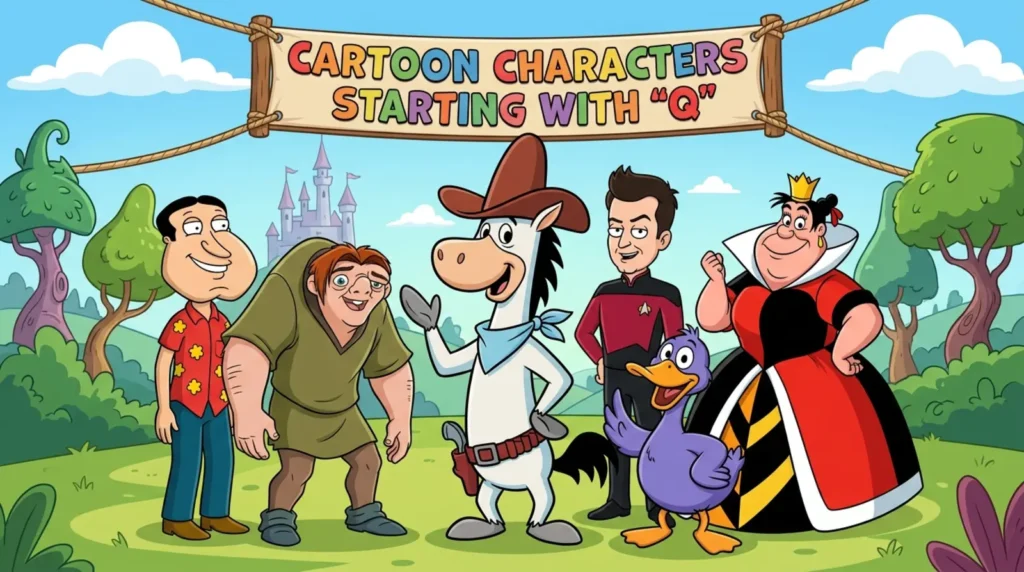
Cartoon characters that start with Q stand out as some of the most distinctive and memorable figures in animation. The letter Q brings an air of quirkiness, queenship, and quiet strength—think regal villains barking “Off with their heads!”, kind-hearted outcasts finding belonging, or speedy lawmen delivering justice with a drawl. While Q names are uncommon, they deliver outsized personality and cultural staying power across Disney classics, Hanna-Barbera adventures, and modern hits.
This guide dives deep into who these characters are, why they resonate, and how they reflect broader animation trends.
The Allure of Q: Rarity, Royalty, and Personality Power
Q-starting names often signal something special: queens command authority, while quirky protagonists like Quasimodo or Q*Bert highlight underdogs and innovation. In character design, Q’s curved, distinctive shape inspires rounded, expressive silhouettes or sharp, imperious lines. Color psychology frequently leans toward rich reds and golds for royalty or bright, energetic hues for comedic leads. Animation history shows Q characters thriving in both classic hand-drawn eras (bold, exaggerated expressions) and CGI (fluid, detailed worlds), often symbolizing themes of acceptance, power, or absurdity.
Their scarcity boosts memorability, fueling strong merchandising (Disney princess lines) and fan discussions. Culturally, they’ve shaped perceptions of leadership, empathy, and humor from mid-century TV to today’s streaming revivals.
Read Also This Blog : Click Now
Disney’s Q Royalty and Heroes: From Evil Queens to Compassionate Bell-Ringers
Disney dominates with iconic Q figures, blending fairy-tale grandeur and emotional depth.
Quasimodo (The Hunchback of Notre Dame): The gentle, deformed bell-ringer voiced by Tom Hulce is a true hero archetype. His hunched appearance and kind heart challenge beauty standards, making him a standout for themes of inner strength and belonging. Fun fact: His design drew from real Gothic architecture and acting references, showcasing Disney’s shift toward more mature storytelling in the 1990s Renaissance.
Queen of Hearts (Alice in Wonderland): This explosive, card-themed monarch, voiced by Verna Felton, embodies tyrannical comedy with her short temper and croquet obsession. Her red-and-black design and booming commands make her an unforgettable villainess.
Queen Grimhilde / Evil Queen (Snow White and the Seven Dwarfs): The original Disney villain—vain, potion-brewing, and obsessed with beauty. Her transformation sequence remains a landmark in animation effects.
Queen Elinor (Brave): A strong-willed mother and leader whose bear transformation arc explores family bonds and tradition vs. independence. Her detailed Pixar animation highlights emotional nuance.
Other notables: Queen Clarion (Tinker Bell fairies leader), Queen Miranda (Sofia the First), Queenie (101 Dalmatians), and Q*Bert (the arcade hero who crossed into Wreck-It Ralph with his pixelated charm and unique “@!#?@!” speech).
Read Also This Blog : Click Now
Classic and Modern TV Stars: Hanna-Barbera, Nick, and Beyond
Quick Draw McGraw (The Quick Draw McGraw Show): The bumbling horse sheriff, voiced with a Southern drawl, fights crime alongside Baba Looey. His slapstick Western antics defined early TV animation comedy.
Quagmire (Family Guy): Glenn Quagmire’s over-the-top personality and catchphrases add adult humor, making him a controversial yet memorable ensemble player.
Quetzal (Dragon Tales): The wise dragon teacher promotes learning and friendship in this preschool favorite, with his colorful, gentle design.
Quackerjack (Darkwing Duck): The toy-obsessed villain with a jester vibe brings chaotic energy to Duckburg, using gadgets in his rivalry with the caped crusader.
Additional gems: Quincy (Little Einsteins music lover), Quailman (Doug’s superhero alter-ego), and various queens like Queen Lillian (Shrek) or Queen Moon (Star vs. the Forces of Evil).
Read Also This Blog : Click Now
Quirky Sidekicks, Villains, and Supporting Cast Across Studios
Q characters frequently fill vivid supporting roles that steal scenes:
- Q*Bert: Nostalgic arcade icon turned film cameo—symbolizes gaming history.
- Queen La (Tarzan): Fierce leopard priestess with mystical powers.
- Quibble Pants (My Little Pony): Argumentative pony highlighting debate and friendship lessons.
Broader rosters include anime-influenced figures (e.g., various “Queen” titles) and crossovers, easily surpassing 100 when counting variants, Pokémon like Quaquaval, or extended media.
Read Also This Blog : Click Now
Heroes vs. Villains, Classic vs. Modern: Key Comparisons
Heroes Table (Select Examples):
- Quasimodo: Hero – Compassionate outcast; Disney.
- Quick Draw McGraw: Hero – Clumsy lawman; Hanna-Barbera.
- Quetzal: Mentor Hero – Wise educator; Dragon Tales.
Villains Table (Select Examples):
- Queen of Hearts: Villain – Tyrannical ruler; Disney.
- Quackerjack: Villain – Gadget-wielding jester; Disney.
- Evil Queen: Villain – Vain sorceress; Disney.
Classic vs. Modern:
- Classic (1950s–1990s): Exaggerated physical comedy (Quick Draw) and archetypal royalty.
- Modern: Deeper psychology (Quasimodo’s empathy, Elinor’s growth) and diverse representation.
Funniest: Quick Draw’s mishaps or Quagmire’s antics.
Most Powerful/Regal: Various Queens commanding armies or magic.
Studio Spotlight: Disney leads in emotional depth; Hanna-Barbera in broad comedy.
Design Psychology, Animation Evolution, and Lasting Impact
Q characters often feature rounded “Q”-like forms for approachability (Quasimodo, Q*Bert) or angular authority (queens). Silhouette recognition is strong—crowns, bells, or pixel blocks ensure instant recall. Animation principles shine: squash-and-stretch for comedy, subtle expressions for drama.
Historically, post-WWII TV animation used Q leads for quick, repeatable gags, while Renaissance Disney added Broadway-level storytelling. Today, they thrive in reboots and games, influencing pop culture through memes, cosplay, and merchandise. Industry trends favor their inclusivity potential—outsiders like Quasimodo mirror real-world diversity conversations.
Original insight: The “Q” sound’s rarity encourages voice actors to experiment, yielding iconic deliveries (the Queen’s rage, Quick Draw’s twang) that boost emotional connection and rewatch value.
FAQs
What are the most famous cartoon characters that start with Q?
Quasimodo, Queen of Hearts, Quick Draw McGraw, Q*Bert, and Queen Elinor top the charts for their cultural footprint.
Are there many Pixar characters starting with Q?
Fewer direct ones, but Queen Elinor (Brave) is a standout with rich Pixar emotional animation.
Why do Q characters often feel special or royal?
The letter’s association with “queen” and uncommon usage gives them inherent gravitas or quirky distinction.
Do Q characters appear in superhero or action cartoons?
Yes—Quicksilver (mutant speedster), Quasar variants, and gadget villains like Quackerjack add action flair.
Cartoon characters that start with Q prove the alphabet’s quiet corners hold some of animation’s loudest personalities. From compassionate bell-ringers to hot-headed monarchs, they entertain while teaching empathy, courage, and the joy of absurdity. Which Q legend is your favorite, and why? Drop a comment we’d love to hear!

