

Cartoon characters that start with H represent some of the most beloved, quotable, and culturally dominant figures in animation history. From bumbling dads like Homer Simpson to heroic demigods like Hercules and stretchy super-moms like Helen Parr (Elastigirl), these characters deliver heart, humor, and high-stakes adventures. Whether you’re here for nostalgia, parenting inspiration, or deep-dive trivia, this guide explores the rich world of H-named animated icons.
H names often evoke warmth (Happy), heroism (Hercules, Hiro), or everyday relatability (Homer, Hank Hill), making them perfect for both lead roles and memorable supporting casts. Let’s dive in.
The Enduring Appeal of H Characters in Animation
The letter H brings a hearty, approachable sound—perfect for larger-than-life personalities. In character design, H characters frequently feature rounded, expressive silhouettes for comedy or powerful, dynamic builds for action. Animation studios have used them to explore family dynamics, personal growth, and societal satire across decades. From Hanna-Barbera’s early TV experiments to Pixar’s emotional depth and DC’s chaotic anti-heroes, H characters mirror evolving audience tastes: more complex, diverse, and emotionally resonant.
Their cultural footprint is massive—think Homer’s “D’oh!” entering everyday language or Harley Quinn redefining female anti-heroes.
Read Also This Blog : Click Now
Disney & Pixar Powerhouses: Strength, Heart, and Humor
Disney’s H roster is packed with classics and modern standouts.
Hercules (Hercules): The muscular demigod, voiced by Tate Donovan, goes from zero to hero in the 1997 film and animated series. His optimistic personality, god-like strength, and journey of self-discovery embody the hero’s archetype. Fun fact: His design draws from Greek statues but with exaggerated cartoon physics for comedic battles against Hades.
Hades (Hercules): The flamboyant Lord of the Underworld, voiced by James Woods, steals scenes with rapid-fire wit and fiery hair. As a scheming villain, his blue flame aesthetic and deal-making personality contrast traditional devil tropes with showbiz flair.
Helen Parr / Elastigirl (The Incredibles): This flexible superhero mom balances family life and crime-fighting. Her adaptable body and no-nonsense leadership highlight modern parenting and empowerment themes. Voiced by Holly Hunter.
Hiro Hamada (Big Hero 6): The brilliant young inventor and tech hero leads the team with Baymax. His growth from grief to heroism showcases intelligence and emotional depth in Pixar’s style.
Hamm (Toy Story): The piggy bank with a sassy attitude provides comic relief. His loyalty and one-liners make him a fan-favorite in the franchise.
Happy (Snow White and the Seven Dwarfs): The cheerful dwarf with a big smile and hearty laugh represents pure joy in Disney’s first feature.
Heihei (Moana): The comically inept rooster adds slapstick humor. His oblivious personality contrasts Moana’s determination perfectly.
Horace Horsecollar: Mickey’s classic pal, an anthropomorphic horse known for his know-it-all charm in early shorts.
Others include Hans (Frozen villain), Heimlich (A Bug’s Life caterpillar), and Henry J. Waternoose (Monsters, Inc. antagonist).
Read Also This Blog : Click Now
Nickelodeon, Cartoon Network & Hanna-Barbera Legends
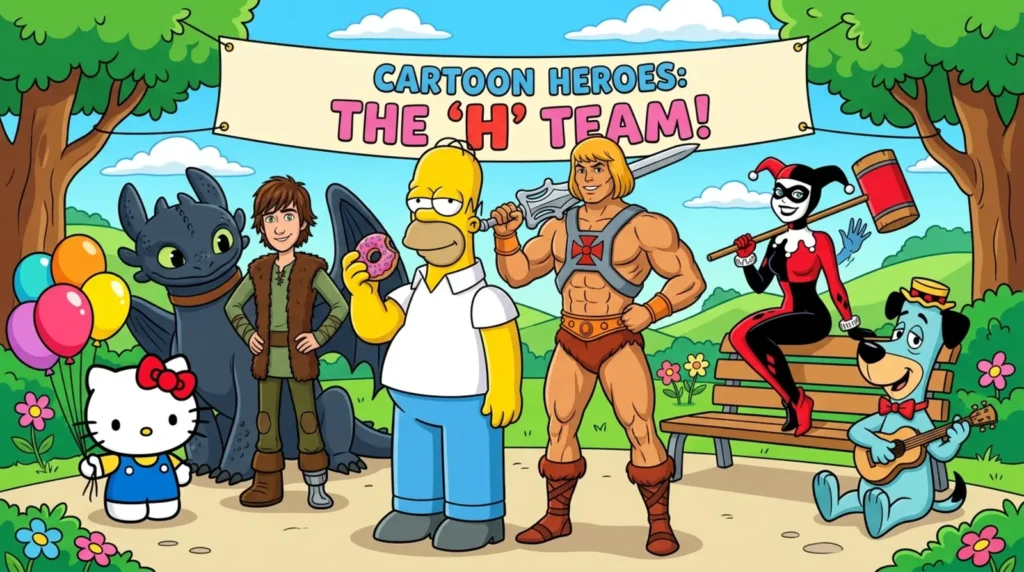
Homer Simpson (The Simpsons): The ultimate everyman dad—loveable, lazy, and legendary. Voiced by Dan Castellaneta, his antics define animated sitcoms. Fun fact: His design emphasizes simplicity for endless physical comedy.
Harley Quinn (Batman: The Animated Series and beyond): From Joker’s sidekick to chaotic icon. Her mallet-wielding energy, pigtails, and evolution into an independent anti-hero revolutionized female characters.
Huckleberry Hound: Hanna-Barbera’s laid-back blue dog who sings “Oh My Darling Clementine” while tackling odd jobs. A pioneer of limited animation with charm to spare.
He-Man (Masters of the Universe): The sword-wielding Prince Adam transforms into the ultimate hero. His “By the power of Grayskull!” is pure 80s nostalgia.
Hank Hill (King of the Hill): The propane-selling family man embodies Southern values with deadpan humor.
Huey, Dewey, and Louie: Donald Duck’s mischievous triplet nephews, masters of chaos and adventure.
Additional gems: Hong Kong Phooey, Helga Pataki (Hey Arnold!), and more from expansive Hanna-Barbera and Nick libraries.
Read Also This Blog : Click Now
Heroes, Villains & Sidekicks: Archetypes Across Studios
H characters span the moral spectrum, often with strong family or mentorship ties.
Heroes Table (Examples):
- Hercules: Disney – Optimistic strongman; mentor relationships.
- Hiro Hamada: Pixar – Genius inventor; teamwork focus.
- Helen Parr: Pixar – Protective mother; adaptability.
- He-Man: Filmation – Powerhouse; secret identity.
Villains Table (Examples):
- Hades: Disney – Charismatic schemer; underworld ruler.
- Hans: Disney – Deceptive prince; betrayal expert.
- Horned King: Disney – Dark sorcerer; horror elements.
Classic vs. Modern:
- Classic: Simpler, archetype-driven (Happy, Horace).
- Modern: Layered backstories and growth (Harley, Hiro).
Funniest: Homer Simpson or Heihei.
Smartest: Hiro Hamada or Hank Hill’s pragmatic wisdom.
Most Powerful: Hercules or He-Man in raw strength.
Read Also This Blog : Click Now
Design Psychology, Animation Evolution & Cultural Legacy
H characters often use bold, rounded forms for approachability (Homer’s belly, Happy’s cheeks) or sharp contrasts for drama (Hades’ flames). Color psychology shines: reds/oranges for energy (Hercules), blues for cool intellect or menace (Hades). Silhouette design aids quick recognition in fast-paced TV animation.
Historically, Hanna-Barbera revolutionized TV with limited animation, making H characters like Huckleberry Hound affordable icons. Disney elevated them with emotional depth and music. Today, they thrive in merchandising, reboots (X-Men influences via broader Marvel, though H-focused here), and memes. Internet popularity explodes with Harley cosplay and Homer GIFs, while industry trends favor strong female H leads like Elastigirl for representation.
Original insight: Many H characters symbolize “heart” — resilience amid flaws — mirroring animation’s shift from escapism to relatable storytelling.
Studio Spotlight & Topical Depth
- Disney/Pixar: Emphasis on family and growth.
- Hanna-Barbera: Quirky everymen for broad appeal.
- DC/Warner: Edgy anti-heroes like Harley.
- Others: Educational or action-focused (Hey Arnold!’s Helga for emotional complexity).
Comparison Insights: Heroes often paired with sidekicks (Hercules/Pegasus); villains with schemes (Hades/pain & panic).
FAQs
Who is the most famous cartoon character that starts with H?
Homer Simpson tops many lists for his cultural ubiquity, followed closely by Hercules and Harley Quinn.
Are there many Disney characters starting with H?
Yes—over 50, including major heroes like Hercules and Hiro, plus memorable supporting roles like Happy and Hamm.
What makes H characters so versatile?
Their names lend themselves to humor, heroism, and heart, fitting comedy, action, and drama across eras and studios.
Any strong female H characters?
Absolutely—Harley Quinn, Helen Parr/Elastigirl, Helga Pataki, and Honey Lemon stand out for depth and agency.
Cartoon characters that start with H prove the letter packs a punch of personality, power, and pure fun. From donut-loving dads to world-saving heroes, they continue inspiring generations. Who’s your favorite H icon, and why? Drop it below!

