

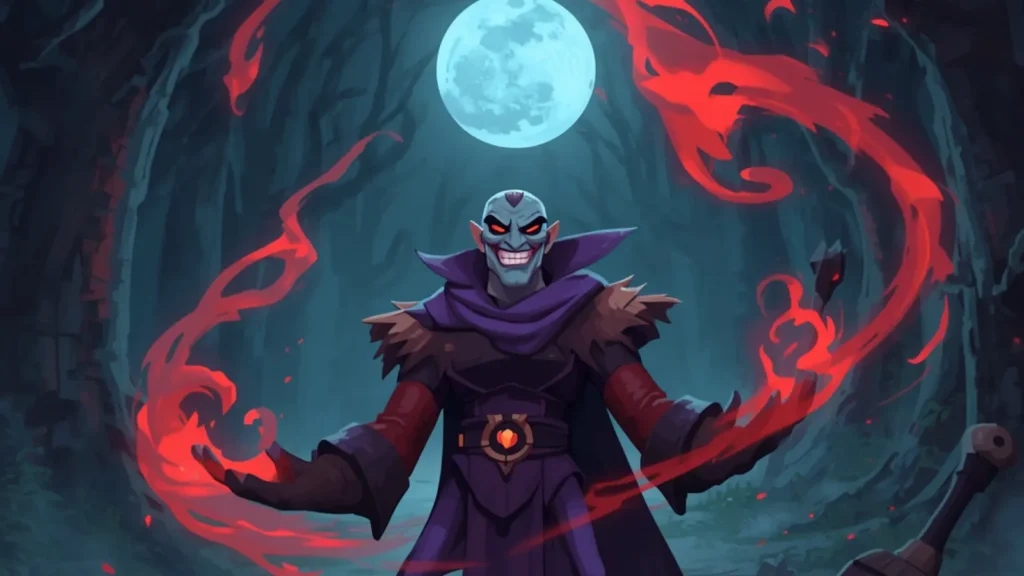
If you want to know how to make evil in Infinite Craft, you can create it by combining Chaos + Destruction. This is one of the shorter currently documented routes, although other established recipes can also produce Evil, including Hate + Fire.
The great thing about Infinite Craft is that you do not need to start with a special item. Every recipe begins with the four basic elements: Earth, Water, Fire, and Wind. You combine two elements at a time, save the result, and then use that new element to unlock more crafting combinations.
Below, you will find the quickest practical route to Evil, an alternative recipe, the exact crafting steps, troubleshooting advice, related recipes, and beginner-friendly strategies for discovering more hidden combinations.
Quick Answer: How to Make Evil in Infinite Craft
The simplest route covered in this guide is:
| Step | Combine | Result |
| 1 | Wind + Wind | Tornado |
| 2 | Tornado + Water | Tsunami |
| 3 | Tornado + Tsunami | Destruction |
| 4 | Destruction + Fire | Explosion |
| 5 | Destruction + Explosion | Chaos |
| 6 | Chaos + Destruction | Evil |
So the final recipe is:
😈 Chaos + 💥 Destruction = Evil
A separate documented route creates Evil by combining Hate + Fire, which explains why you may see a different recipe in another crafting guide.
What Is Evil in Infinite Craft?
Evil is a craftable element in Infinite Craft. Like other discoveries, it becomes part of your element collection after you successfully combine the required ingredients.
Evil is particularly useful because it can act as a building block for other dark, fantasy, supernatural, and fictional discoveries. For example, documented recipes use Evil to create things such as Demon, while other recipe databases list additional Evil-based combinations.
That makes Evil more than just a collection item. Once you have it, you can test it against elements already in your discovery tree and potentially open several new crafting branches.
How Infinite Craft’s Crafting System Works
Infinite Craft uses a simple two-element crafting mechanic.
You begin with:
- 🌎 Earth
- 💧 Water
- 🔥 Fire
- 💨 Wind
You select two available elements and combine them. The game produces a result, and that result can then be reused in another combination.
For example:
Wind + Wind = Tornado
You can then take that Tornado and combine it with Water:
Tornado + Water = Tsunami
The process continues until you reach your target.
This creates a progression system that feels more like exploring a discovery tree than following a traditional game level system. A seemingly ordinary result such as Tornado can eventually lead to Destruction, Chaos, Evil, and many other discoveries.
What You Need Before Making Evil
You do not need any rare starting item.
If you are beginning from a fresh Infinite Craft board, make sure you have access to:
- Earth
- Water
- Fire
- Wind
The Chaos + Destruction route requires you to create a few intermediate elements first.
Required Intermediate Elements
You will need:
- Tornado
- Tsunami
- Destruction
- Explosion
- Chaos
Once you have Chaos and Destruction, the final combination is straightforward.
Step-by-Step: Make Evil in Infinite Craft
Step 1: Make Tornado
Start with two Wind elements.
💨 Wind + 💨 Wind = 🌪️ Tornado
Tornado is an important early ingredient because it can be combined with Water to create Tsunami.
Step 2: Make Tsunami
Take the Tornado you just created and combine it with Water.
🌪️ Tornado + 💧 Water = 🌊 Tsunami
Keep both Tornado and Tsunami available because you need Tornado again for the next step.
Step 3: Make Destruction
Now combine Tornado with Tsunami.
🌪️ Tornado + 🌊 Tsunami = 💥 Destruction
Destruction is one of the two ingredients needed for the final Evil recipe.
Do not accidentally discard it or assume you need to recreate it later. Keeping useful intermediate elements in your workspace can make longer crafting chains easier to manage.
Step 4: Make Explosion
Next, combine Destruction with the original Fire element.
💥 Destruction + 🔥 Fire = 💣 Explosion
Explosion becomes the bridge between Destruction and Chaos.
Step 5: Make Chaos
Now combine your Destruction with Explosion.
💥 Destruction + 💣 Explosion = 🌀 Chaos
At this point, you have reached one of the two ingredients required to create Evil.
Step 6: Make Evil
This is the final combination.
🌀 Chaos + 💥 Destruction = 😈 Evil
Congratulations. Evil should now be added to your Infinite Craft discoveries.
Complete Evil Recipe at a Glance
| # | First Element | Second Element | Result |
| 1 | Wind | Wind | Tornado |
| 2 | Tornado | Water | Tsunami |
| 3 | Tornado | Tsunami | Destruction |
| 4 | Destruction | Fire | Explosion |
| 5 | Destruction | Explosion | Chaos |
| 6 | Chaos | Destruction | Evil |
This route is easy to remember because the progression follows a logical chain:
Wind → Tornado → Tsunami → Destruction → Explosion → Chaos → Evil
A 2026 recipe guide currently documents the same Chaos + Destruction ending, while other guides document different paths.
Alternative Recipe: Hate + Fire
If the Chaos route does not work in your version or you are following another established crafting tree, there is another well-documented method:
❤️ Hate + 🔥 Fire = 😈 Evil
The longer path to Hate commonly works like this:
| Step | Combination | Result |
| 1 | Wind + Fire | Smoke |
| 2 | Smoke + Water | Fog |
| 3 | Earth + Wind | Dust |
| 4 | Dust + Earth | Planet |
| 5 | Planet + Fog | Venus |
| 6 | Venus + Fog | Love |
| 7 | Water + Wind | Wave |
| 8 | Wave + Wave | Tsunami |
| 9 | Wind + Wind | Tornado |
| 10 | Tornado + Tsunami | Destruction |
| 11 | Love + Destruction | Hate |
| 12 | Hate + Fire | Evil |
This route has been documented by multiple gaming guides, including Dot Esports and Prima Games.
Why Are There Different Evil Recipes?
This is an important part of Infinite Craft.
Different websites can show different crafting combinations for the same target. Some databases also contain community-submitted or alternative recipes.
For Evil, documented examples include:
- Chaos + Destruction
- Hate + Fire
- Other community-discovered combinations
Therefore, seeing a different recipe does not automatically mean one guide is wrong.
It is better to think of Infinite Craft recipes as a network of possible paths rather than one fixed linear recipe list.
Why Players Search for Evil
Evil is a useful target because it can lead toward several themed discoveries.
Once you have Evil, try combining it with different concepts instead of stopping immediately.
For example, current recipe databases document combinations involving Evil and other elements, including Demon.
This makes Evil useful for:
- Dark fantasy discoveries
- Supernatural elements
- Villain-themed combinations
- Demon-related recipes
- Fictional concepts
- Experimental crafting
- Unlocking new branches of your discovery tree
The exact results depend on the elements available in your game state.
Related Recipes to Try After Evil
Once you have Evil, experimentation becomes more interesting.
Evil + Lake
One documented route lists:
Evil + Lake = Demon
Demon is another useful supernatural element that can create additional branches.
Evil + Fishbowl
A documented recipe database also lists:
Evil + Fishbowl = Evil Fish
This demonstrates how the same Evil element can move into a completely different semantic category.
Evil + Other Elements
Do not limit yourself to combinations that sound logically dark.
Infinite Craft is built around unexpected semantic relationships. Try Evil with:
- Human
- King
- Night
- Love
- God
- Genie
- Plant
- Water
- Fire
- Earth
- Anime
- Animals
Some combinations may produce surprising results rather than obvious ones.
Evil Progression Chart
Here is the main progression in a compact format:
Wind + Wind
↓
Tornado
↓ + Water
Tsunami
↓
Tornado + Tsunami
↓
Destruction
↙ ↘
Fire Explosion
↓ ↓
Explosion ← Destruction
↓
Chaos
↓
Chaos + Destruction
↓
EVIL
This progression is useful for beginners because it shows that the final recipe is not isolated. Each discovery creates the next opportunity.
Beginner Mistakes to Avoid
1. Searching for Evil too early
Evil is not one of the four starting elements. You need to build intermediate discoveries first.
2. Forgetting previously created elements
When working through a recipe, remember that earlier discoveries remain useful. You do not necessarily need to recreate them from scratch.
3. Assuming every guide uses the same recipe
Infinite Craft has multiple documented paths. A guide showing Hate + Fire is not necessarily contradicting a guide showing Chaos + Destruction.
4. Stopping after one successful recipe
Once you make Evil, test it with several elements. The real value of Infinite Craft comes from discovering what your new element can create.
5. Combining too many things at once
The basic crafting mechanic works with two elements at a time. Keep combinations organized so you know which pair produced each result.
Advanced Infinite Craft Strategy
Experienced players can speed up discovery by thinking in terms of semantic relationships rather than only physical objects.
For example, if you need a concept such as Evil, ask:
- What could represent the opposite of something?
- What concepts are associated with darkness?
- What words commonly appear alongside the target?
- Can an abstract idea combine with an object?
- Can a newly created element create a second branch?
This approach is often more productive than randomly dragging elements together.
Keep Useful Branches
When you create an unusual element, test it before moving on.
A discovery that looks useless may become an important ingredient several steps later.
Record Successful Combinations
For complicated crafting sessions, keep a simple list:
| Element | Created From | Useful For |
| Tornado | Wind + Wind | Tsunami |
| Tsunami | Tornado + Water | Destruction |
| Destruction | Tornado + Tsunami | Explosion, Evil |
| Explosion | Destruction + Fire | Chaos |
| Chaos | Destruction + Explosion | Evil |
| Evil | Chaos + Destruction | Further discoveries |
This prevents you from repeating the same work.
Recipe Variations and Game Updates
Infinite Craft guides can become outdated because players continually discover new combinations and recipe databases may record different paths at different times.
That is why it is useful to distinguish between:
- A specific known recipe
- An alternative recipe
- A community discovery
- A route optimized for fewer combinations
- A route that uses elements you already have
For Evil, current online recipe databases document Chaos + Destruction, while established gaming guides have documented Hate + Fire.
If one combination fails in your current game state, try another documented path instead of assuming your entire crafting session is broken.
How to Progress Faster in Infinite Craft
If your goal is to discover lots of elements rather than just Evil, use a broader progression strategy.
Build a Core Collection
Try to unlock common concepts such as:
- Plant
- Smoke
- Dust
- Planet
- Wave
- Tornado
- Fire-related elements
- Water-related elements
- Human
- Life
- Love
These frequently become useful ingredients for larger crafting chains.
Explore Opposites
Opposite concepts are especially useful for experimentation.
If you have:
Love
try exploring combinations that could produce:
Hate
Likewise, once you have Evil, testing it against conceptual opposites can reveal unexpected discoveries.
Use New Elements Immediately
Whenever you unlock something unusual, combine it with several existing elements.
This is one of the simplest advanced strategies for expanding your discovery tree.
Is There Only One Way to Make Evil?
No.
At least two well-documented paths exist:
| Route | Final Combination | General Style |
| Chaos route | Chaos + Destruction | Shorter direct progression |
| Hate route | Hate + Fire | Longer conceptual progression |
The Chaos route is the one used as the main recipe in this guide. The Hate route is useful when you already have Love, Destruction, or related ingredients.
Frequently Asked Questions
1. What is the easiest way to make Evil in Infinite Craft?
A documented short route is Chaos + Destruction = Evil. You can make Chaos by combining Destruction with Explosion.
2. Can I make Evil with Hate and Fire?
Yes. Hate + Fire = Evil is another documented recipe.
3. What are the starting elements in Infinite Craft?
The four basic starting elements are Earth, Water, Fire, and Wind.
4. What do I need to make Destruction?
For the route in this guide, combine Tornado + Tsunami to make Destruction.
5. How do I make Tornado?
Combine Wind + Wind.
6. How do I make Tsunami?
Using the main Evil route, combine Tornado + Water = Tsunami.
7. Why does another website show a different Evil recipe?
Infinite Craft has multiple documented crafting paths and community discoveries. Different guides may therefore present different routes to the same element.
8. What can I make after unlocking Evil?
Evil can be combined with other elements to create additional discoveries. One documented example is Evil + Lake = Demon.
9. Can Evil be used to make other Evil-themed elements?
Yes. Evil can serve as an ingredient in further combinations, including supernatural and fictional concepts. Recipe databases document several Evil-based discoveries.
10. What should I do if the recipe does not work?
Check that you are combining the exact elements shown in the recipe. If a particular route does not produce Evil, try the alternative Hate + Fire route and verify that each intermediate element was created correctly.
Final Takeaway
If you only need the answer to how to make evil in Infinite Craft, remember this short chain:
Wind + Wind = Tornado
Tornado + Water = Tsunami
Tornado + Tsunami = Destruction
Destruction + Fire = Explosion
Destruction + Explosion = Chaos
Chaos + Destruction = Evil
That gives you a practical route from the four starting elements to 😈 Evil. A second established route uses Hate + Fire, so do not be surprised if another Infinite Craft recipe guide gives you a different combination.
Once Evil is unlocked, the best next step is to experiment. Try it with elements you already own, especially conceptual, fantasy, supernatural, and everyday items. Infinite Craft becomes much more interesting when you stop looking for only one correct answer and start exploring the relationships between your discoveries.

